
What mold pricing is made of
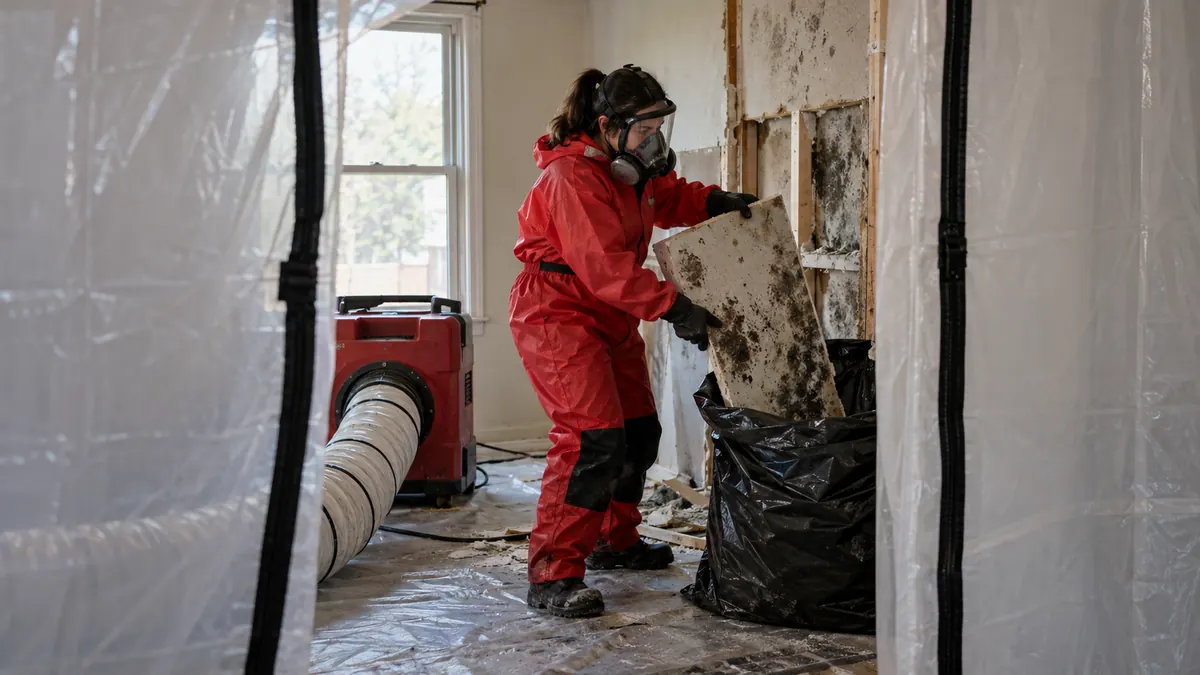
Most of the cost is labor and containment: sealing the area, running negative air and HEPA filters and working in protective gear. Material removal, such as drywall and insulation, adds to it, and so does cleaning the framing.
The cheapest mold job is the one that is caught early. Surface growth on a dry, sound surface is small. Growth that has soaked into insulation, subfloor or joists is not.
If the moisture source is not fixed, nothing else lasts. We always start by finding the water.
What is not in this range
- Rebuilding drywall, paint and flooring
- Plumbing, roof and drainage repairs
- Independent air or surface testing
- Replacement of rotted structural wood
Services that match this
- High-Humidity Structural Mold RemediationGeorgia humidity and hidden leaks feed mold inside walls and ceilings. We contain the area, filter the air, remove growth and dry the structure.
- Crawl Space Mold Remediation & Framing SanitationDamp clay and open vents leave joists and subfloor coated in growth. We clean the framing, dry the wood and report on the moisture source.
- Thermal Imaging & Hidden Moisture MappingInfrared scans and moisture meters trace hidden water behind insulation, drywall and flooring without cutting first, so repairs target the actual wet area.
See typical ranges for every service on the pricing page.
Questions about this tool
Is this a quote?
No. It is a typical range. A crew has to see the area and read the moisture to give a real number.
Why does the source matter to the price?
Mold removed from a wall that is still wet comes back. Drying and fixing the source is part of a lasting job.
Do you test for mold?
We can work alongside an independent tester. Our work is removing growth and drying the structure.
Can I clean it myself?
Small surface spots on hard, dry surfaces can be wiped. Anything on drywall, insulation or in a crawl space is better left alone, because disturbing it spreads spores.
Read next What the 48-Hour Mold Window Really Means in Gwinnett.