Why crawl spaces stay damp in this area
Many homes here were built on vented crawl spaces. The idea is that outside air carries moisture out. In a Georgia summer it does the opposite. Warm, wet air flows in, hits the cooler framing and ductwork, and condenses. The pine joists hold the water, and mold follows.
The red clay below makes it worse. Clay drains slowly and releases moisture into the crawl space for days after rain. If the vapor barrier is torn, missing or only partly covering the soil, that moisture goes straight into the wood. The same space can read a damp 80 percent humidity from June to October.
What damp joists look like
Most people see the damage upstairs before they see it below.
- A musty smell that seems to come from the floor vents
- Cupped or squeaky hardwood, or doors that stick in summer
- Dark spotting or white fuzz on joists and subfloor
- Condensation on ductwork or pipes in the crawl space
- Sagging insulation or a torn vapor barrier
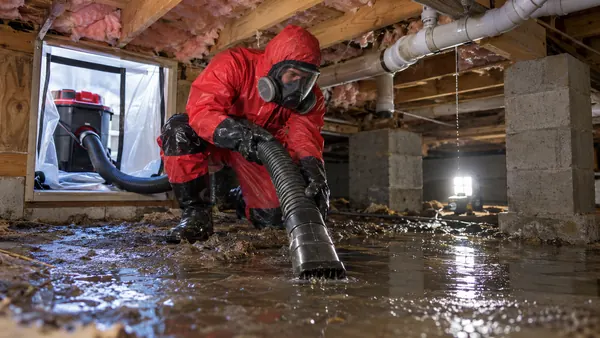
- Standing water or damp soil after a rain
Encapsulation, dehumidifiers and drainage: who does what
We clean and dry crawl spaces. Long-term moisture control is a separate trade. Encapsulation seals the soil and walls with a heavy liner. A dehumidifier holds humidity down. Drainage, such as a perimeter drain or sump, moves water away.
Which of these makes sense depends on the space. A dry crawl space may need only a repaired barrier. A wet one needs drainage first. We will describe what we saw and recommend that you get more than one opinion before you spend.
Cleaning wood without destroying it
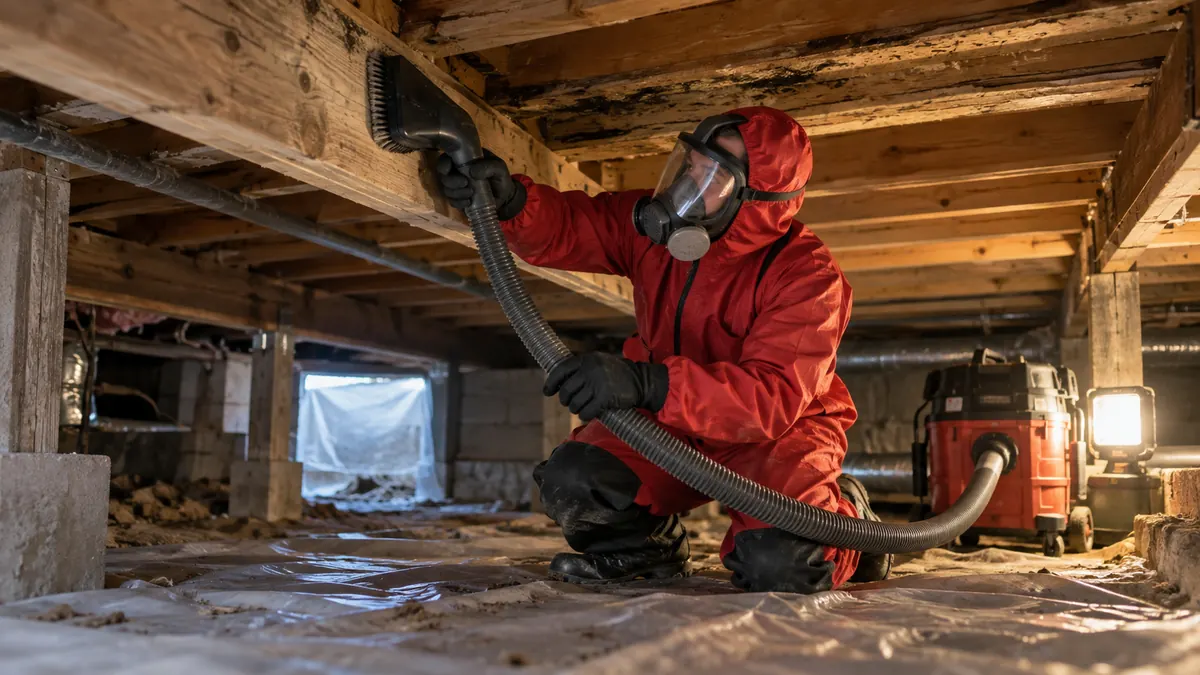
Surface mold on structural wood can often be cleaned instead of replaced. We HEPA-vacuum the framing to lift growth and spores, then use dry or damp-mechanical cleaning methods, depending on the species and the condition of the wood. Soft or rotted wood is a different matter. It is a carpenter's repair, and we will tell you where we see it.
After cleaning, the wood still has to dry. We run dehumidifiers and air movers in the closed crawl space and track the moisture content of the joists until it falls to a safe range. Without that step, new growth can start within weeks.
How we sanitize a crawl space
Inspect and photograph
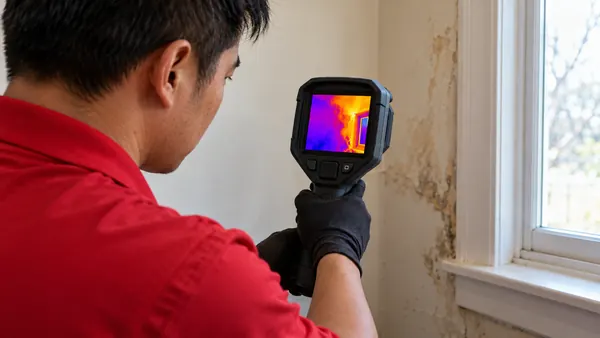
We crawl the space, photograph wet spots and growth, and measure humidity and wood moisture content.
Seal and protect
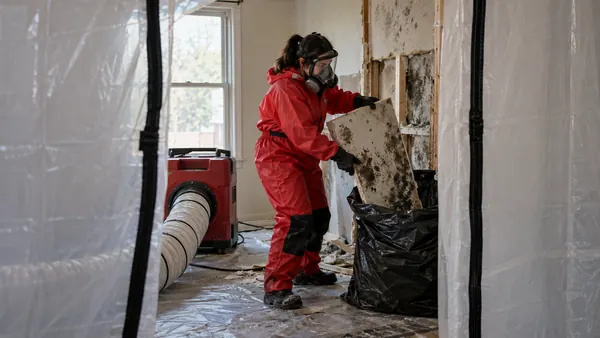
The access is sealed from the house, and we set air filtration so the crawl does not send spores upstairs.
Remove damaged insulation
Wet or fallen insulation comes out, because it holds moisture against the subfloor.
Clean the framing
HEPA vacuums and mechanical cleaning remove growth from joists, subfloor and piers.
Treat the wood
An EPA-registered antimicrobial is applied to cleaned surfaces, following its label.
Dry and report
We dry the space, log readings and write what we found, including whether encapsulation, drainage or a dehumidifier is worth discussing.
What we check before we close the crawl space
Before we finish, we check a short list. Wood moisture readings should be in a safe range and steady across several visits. Remaining insulation should be dry and attached. The ground cover should be intact. Ducts should not drip.
If any of these fail, the space is not ready to be closed up, and we say so.
- Wood moisture in a safe, steady range
- Remaining insulation dry and secure
- Ground cover intact and overlapped
- Ducts and pipes free of condensation
Before we come out
- Do not enter a crawl space that has standing water or sewage
- Check that the HVAC and water lines are not leaking
- Move items away from the access so we can set up
- Close crawl vents only if a contractor advises it
- Take photos from the access opening, not from inside
What we find under older homes
- Plastic vapor barrier that was never taped or has been torn by prior trades
- Bare clay soil that sweats into the air all summer
- Vents blocked by shrubs or covered in debris
- Downspouts that end at the foundation and drain into the crawl
Crawl space mold remediation cost
A typical estimate for crawl space mold work runs about $2,000 to $7,500 for an average home. Square footage, height, insulation and the amount of drying drive it. Encapsulation or a dehumidifier installation are separate trades. These are typical estimates, not guaranteed prices. Call for an exact quote. See all price ranges.
Questions we hear about this
Do I need to encapsulate the crawl space?
Often it helps, but it depends on your space, drainage and budget. We clean and dry first, and we tell you honestly whether encapsulation is worth discussing.
Is mold under the house dangerous?
It can affect the air in the house, because air from the crawl space moves into the house through gaps and floor penetrations. That is why we seal and clean.
Will it come back?
It can if the moisture stays. We tell you what is wet and why, so you can fix the source.
Can you replace damaged joists?
We flag rot and structural concerns. A carpenter or structural contractor does the repairs.
How long does the work take?
Most jobs take two to four days for the cleaning, then a few more for drying, depending on humidity and the wood.
Where we see this most
- Duluth, GA1980s to 2000s two-story homes on vented crawl spaces, where summer air condenses on ducts.
- Doraville, GALow-clearance crawl spaces with torn or missing vapor barriers.
- North Decatur, GAOlder bungalows where clogged footing drains keep humidity above 75 percent.