Signs a pipe has burst above you
Water falls, so signs show up low and late.
- A ceiling stain that spreads or sags
- Dripping from a light fixture or a vent
- The sound of water running in the attic with everything off
- A bulge in a ceiling or a wall corner
- Wet insulation or a pooled drip pan when you look up
- Damp walls on the second floor, then the first
How we dry a multi-floor loss
Stop the water
If it is still flowing, the main water valve is closed. We do not enter an attic that is carrying live electrical loads without caution.
Trace the path
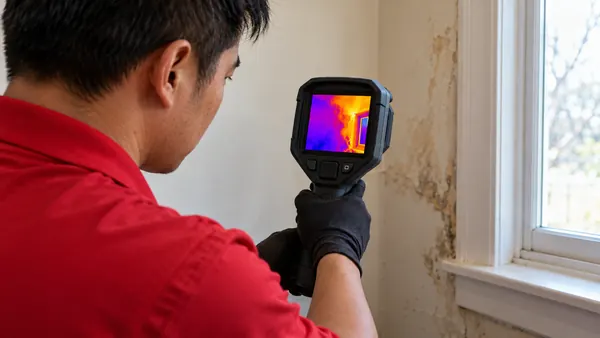
Meters and a thermal camera follow the water from the attic through ceilings and wall cavities on each floor.
Open and extract
Wet ceiling drywall is cut so trapped water and insulation can drop out. Standing water on lower floors is extracted.
Remove wet insulation
Attic and wall insulation that holds water is removed, because it will not dry in place.
Dry every level
Air movers and dehumidifiers are placed on each floor, with wall cavity drying where plaster or paint should stay.
Verify and document
Readings on every floor are logged, and we hand the file to your adjuster.
Attic HVAC drain pans and condensate lines
Not every attic leak is a pipe. Air handlers in attics have a drain pan and a condensate line, and when the line clogs the pan overflows. Water then drips onto the ceiling below. These leaks are slow and easy to miss, and they often run for weeks.
If a stain appears under an air handler or along the line, call an HVAC contractor and a drying crew. We find how far the water traveled and dry it, and they clear and repair the line.
Why attic pipes fail in Georgia homes
Attic supply lines and HVAC drain pans sit above finished spaces. A cold night can split a line that is not insulated. A summer failure is just as likely, because a condensate drain that clogs backs up into the pan, overflows and soaks the ceiling.
Many of the multi-story homes in established subdivisions have attics full of older blown-in insulation, which holds water like a sponge. By the time water reaches the ceiling, the insulation has been soaking for hours.
Why one attic leak can become a four-room claim
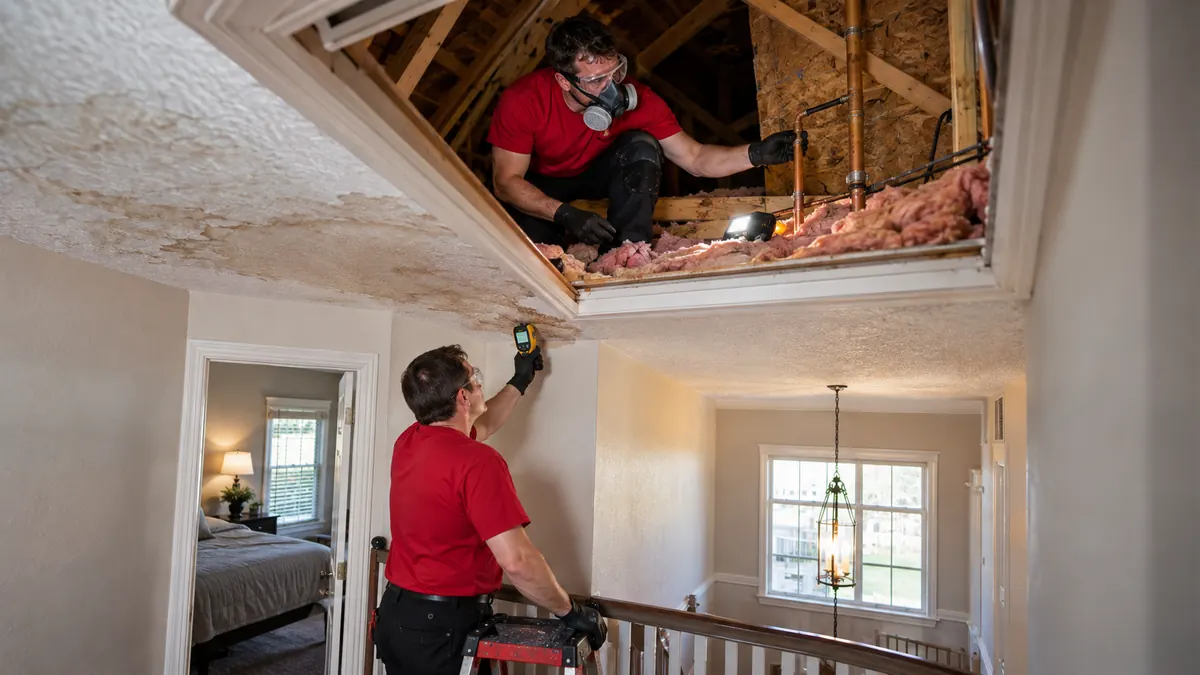
Water follows gravity and framing. It hits the ceiling, then runs along joists and down inside the wall cavities. It can come out two rooms from where it started, or wet the bottom plates on the floor below. That is why we scan every floor, even when the visible stain is in a single room.
Time matters more in the attic than almost anywhere. A hot, humid attic dries wet insulation poorly, and mold on the roof deck is difficult to remove. Fast removal of wet insulation shrinks the scope and the cost.
What we see on attic losses
- Water pooled in a ceiling light fixture, a shock risk
- Wet insulation compressed against the drywall
- Mold on rafters from a slow HVAC drain leak
- A leak that stopped but left the framing damp
Ceilings: when to cut and when to dry
A ceiling that is stained but firm can sometimes be dried in place, with access holes and air movement. A ceiling that sags, bulges or has soaked insulation resting on it usually has to be opened. Leaving wet insulation against drywall keeps it wet.
We cut the smallest section that solves the problem, bag the wet insulation and leave the framing exposed for drying. The ceiling is rebuilt afterward by a drywall contractor.
While you wait
- Shut off the main water valve
- Turn off power to rooms with dripping fixtures at the breaker
- Place buckets, and poke a small hole in a sagging ceiling only if directed
- Move furniture and electronics away from the stain
- Do not enter a wet attic
- Photograph the stains and the attic if safe
Attic burst pipe cleanup cost
A typical estimate for attic burst-pipe drying runs about $2,000 to $9,000, depending on floors affected, insulation removal and ceilings. The pipe repair is a plumber's cost. These are typical estimates, not guaranteed prices. Call for an exact quote. See all price ranges.
Questions we hear about this
Should I cut the ceiling?
If it is bulging with water, a small drain hole can prevent a larger collapse. Call us first and we will talk you through it.
Will I have to replace the ceiling?
Often, yes, for ceilings that sagged. Stained but firm drywall can sometimes be dried.
Is attic insulation always removed?
Wet insulation usually is. Dry insulation beyond the wet area can stay.
Does insurance cover burst pipes?
Sudden pipe bursts are typically covered. Gradual leaks often are not. Document everything and call your agent.
How do you protect the lower floors?
We set drying equipment on each affected level and use wall cavity methods to keep as much finish as we can.
Where we see this most
- Alpharetta, GATall executive homes where an attic leak travels through three levels.
- Dunwoody, GAMulti-level estates with long attic runs and finished lower floors.
- North Atlanta, GACustom multi-level homes with complex roof lines and many attic spaces.