Safety comes before the water
The first rule is simple. Do not wade into water that could touch an outlet, a power strip, an extension cord or the electrical panel. Water and electricity do not mix, and a basement is full of cords. If the water is deep enough to reach the outlets, stay out and call.
If the panel is dry and you can reach it without stepping in water, turn off the breakers for the basement. If you cannot, leave it. A crew can handle that. Gas appliances and water heaters matter too. If the water is near a gas furnace or water heater, do not touch them.
Find out why the pump stopped
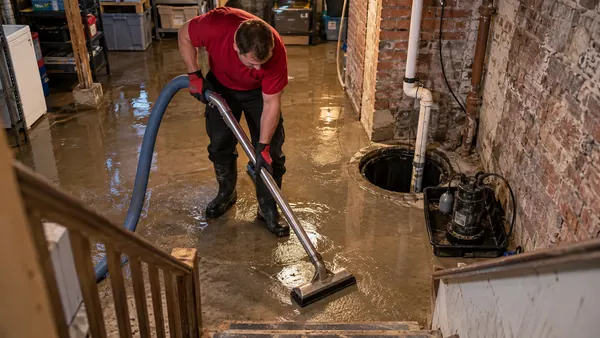
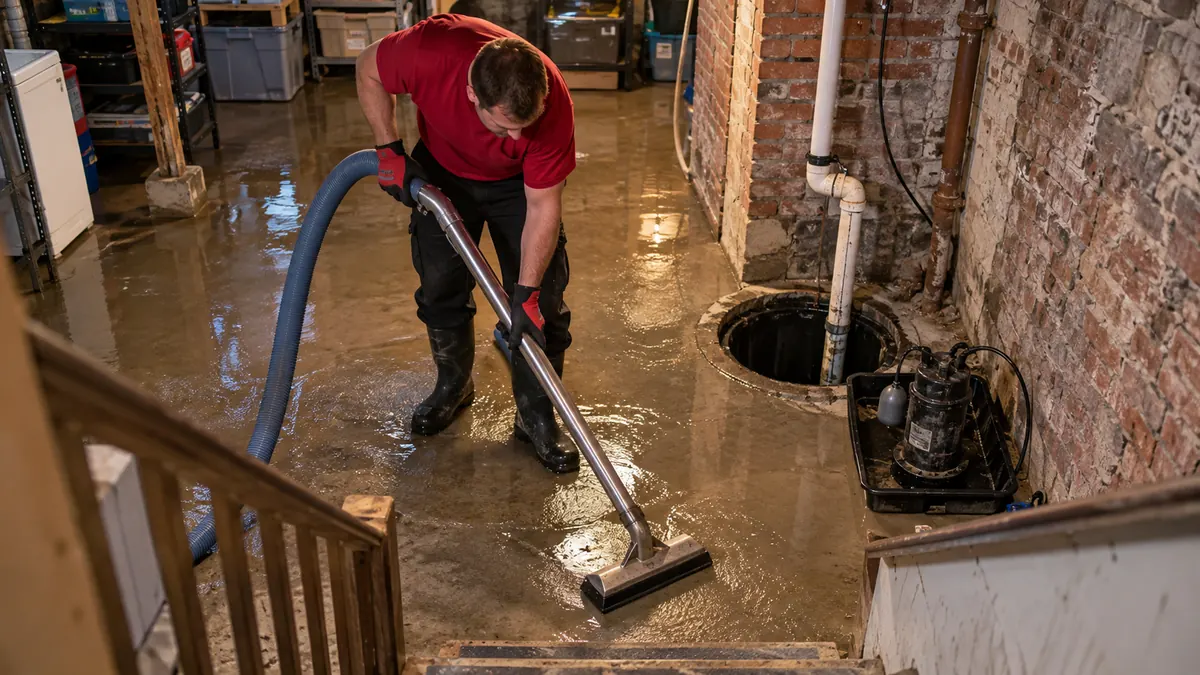
You can often tell in a minute. If the power is out, the pump has no power. If the lights are on and the pump is silent, try the float. A stuck float is the most common failure we see. If the pump hums but nothing moves, it may be clogged or the impeller may have failed.
Look at the discharge line outside if it is safe to go out. A kinked hose, a clog, ice or a discharge that ends too close to the foundation can all make a working pump useless. If you have a battery backup, check whether it has kicked in.
If the power is out
A sump pump on a standard circuit stops when the lights go out. In Gwinnett storms, the outage and the rain arrive together. If you have a generator, keep it outside, away from windows and doors. Never run one in a garage or basement.
If you have a battery backup, it may buy you hours, not days. A long outage with a saturated yard can drain it. Be ready to call for extraction, and move belongings up while you wait.
Save what you can, in this order
Lift documents, electronics and photographs first. Next, boxes and anything cardboard, because wet cardboard falls apart and feeds mold. Then furniture that can be lifted onto blocks or stacked on stairs. Leave heavy items alone. Do not hurt your back for a couch.
Take photos as you go. Take one of the water level against the wall, one of the pit and one of anything that was damaged. Your insurer may want them, and so might your plumber.
What not to do
Do not run a household vacuum on the water. It is not built for it, and it is a shock risk. Do not use fans to dry wet carpet and leave it in place. The pad underneath stays wet and starts to smell. Do not bleach the wall.
Do not keep bailing for hours with buckets. If the pit is filling faster than you can empty it, the ground is still sending water in, and you are working against the clay. Bailing a basement that refills tires you out and risks your safety.
Make the call and tell us three things
When you call, tell us how deep the water is, whether the power is on in the basement and whether the water is still coming in. Those three answers let us plan pumps, safety steps and crew size. We will tell you what to leave alone and what to move.
Tell us what is down there too. A finished basement with carpet is a different job from a bare slab, and a basement with a washer, a water heater and a furnace needs more care. If your area has had days of rain, tell us that as well. The clay is likely still saturated, and we may need to pump more than once.
After the water is out
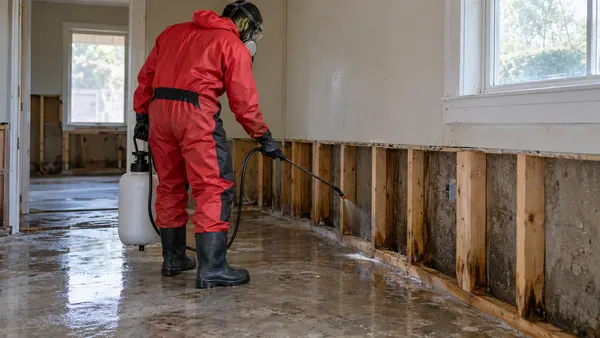
We remove carpet and pad, cut wet drywall at the base, clean the slab and wall and run dehumidifiers and air movers. The basement dries slowly, so we come back and read the numbers each day. We note what we saw at the pit, such as a stuck float, a failed switch or a short discharge line.
Then it is up to a plumber or drainage contractor to replace the pump, add a battery backup or lengthen the discharge. We do not sell pumps. We would rather you hear the honest version from the people who fix them.
Quick answers
Is a basement flood from a failed sump pump covered by insurance?
Often only with a water backup or sump overflow endorsement. Check your policy and call your agent.
Can I use a wet vac on the water?
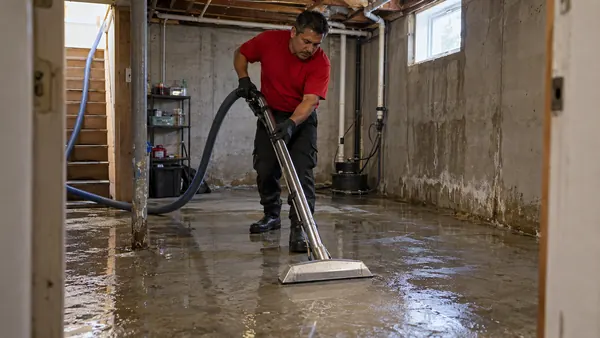
A wet vac made for water is fine for small amounts on a hard floor, if it is plugged into a dry outlet away from the water. For more than that, call a crew.
How soon should I call?
As soon as you can safely do so. Wet drywall and cardboard start growing mold within a day or two.
Will the water come back?
It can while the clay is saturated. We keep pumping, then dry once the weather settles.