Why runoff piles up around low-lying homes
The city sits on rolling ground north of the Chattahoochee, and rain that falls on higher streets runs downhill. Properties at the bottom, including lots near Jones Bridge Park and Simpsonwood Park, collect that water from every roof and driveway upstream.
Clay does not absorb it, so more of every storm runs off than soaks in. Older neighborhood drains were sized for the paving that existed when they were built. Add newer driveways, patios and roof additions, and the extra water arrives faster than the system can take it. That is when it goes through the doors.
Signs your property is a catch basin
Low lots tell on themselves. Look for these after a storm.
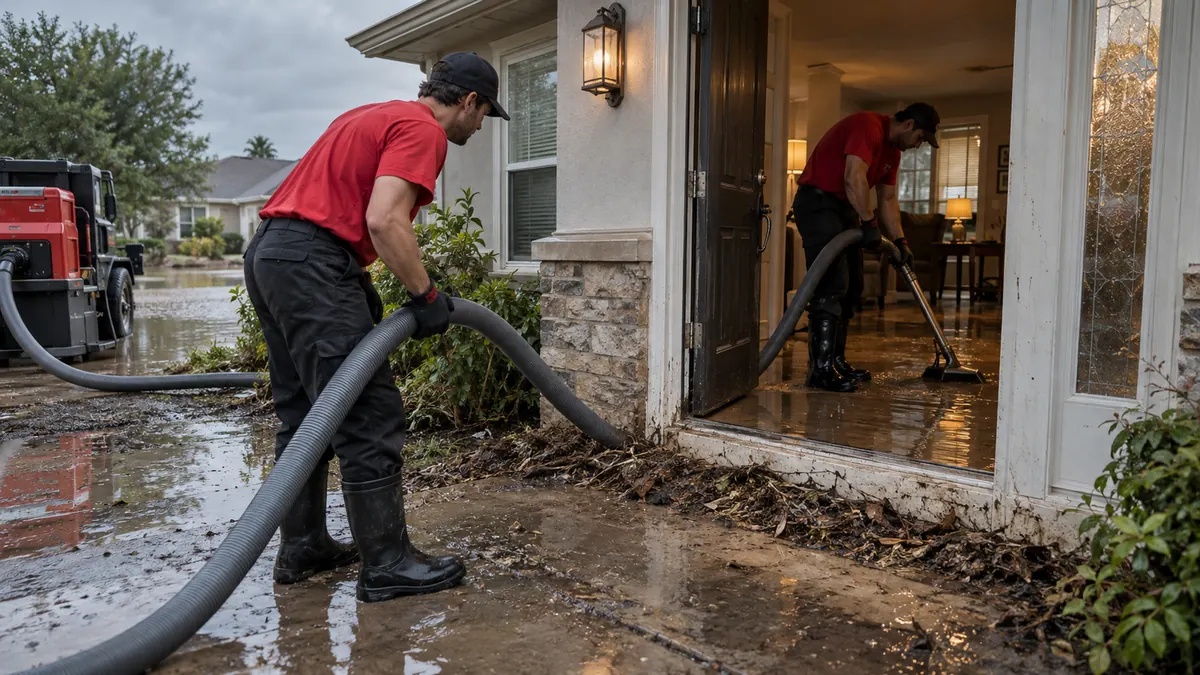
- Water lines or silt on the garage, siding or door thresholds
- Mud and leaves pushed against the back door
- Water that pools at the low corner of the yard and stays for days
- A walk-out door that leaks along the sill during downpours
- A basement that floods in storms but not in plain rain
- Neighbors uphill with newer paving or roof additions
What floodwater leaves behind
Floodwater does damage twice. The water itself soaks floors and walls. Then it leaves silt and residue as it recedes: a fine layer of clay, leaf litter, oil from driveways and lawn chemicals. Dry silt is harder to remove, so we scoop it while it is wet and soft.
Clay silt is sticky and stains concrete, grout and wood grain. We clean before we dry. If we dry first, the residue sets and the odor stays.
How a flash flood job runs
Check the risks
Before work starts, we check for electrical hazards, gas appliances and any sign that the flood was mixed with sewage.
Bulk water out
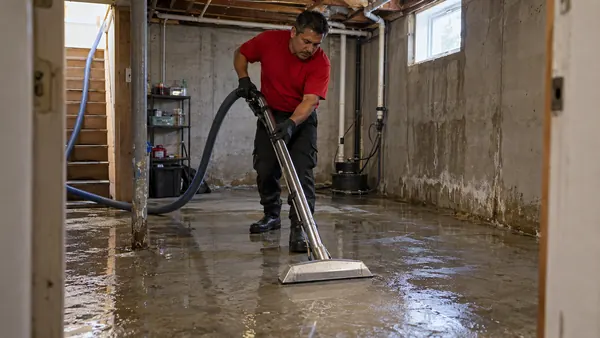
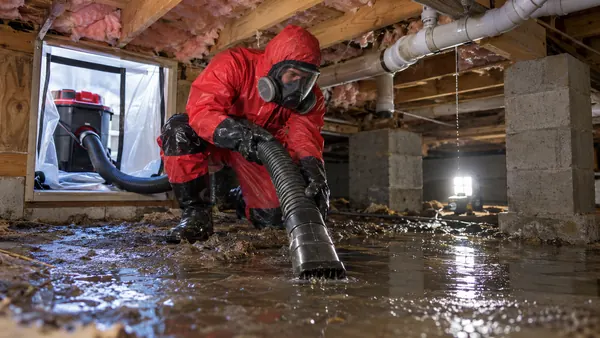
Truck and portable pumps move large volumes quickly. Mud and debris are scooped before they get ground into flooring.
Clear silt
Clay silt is damp and sticky. We remove it from floors, cabinets and wall bases while it is still soft.
Remove what cannot be saved
Carpet pad, bottom drywall and insulation touched by floodwater are cut out and bagged.
Clean and treat
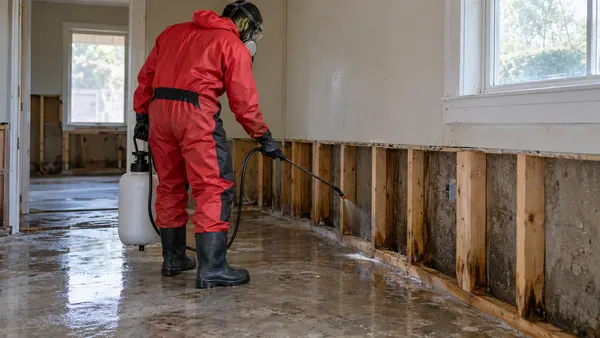
Hard surfaces are cleaned and treated, because floodwater carries bacteria from yards and streets.
Dry to the numbers
Air movers and dehumidifiers run until readings match dry. We log each visit.
Why we treat floodwater as dirty by default
Water that crossed a yard, a driveway or a street picks up soil, pesticides, oil and bacteria. Even if it looks like muddy rain, we treat it as category 3 until the source is clear. That decision determines what stays and what goes, and what gear the crew wears.
Porous materials, such as carpet, pad, insulation and the bottom of drywall, are removed. Hardwood and subfloor can sometimes be saved, if we catch them early. If the flood overlapped a sewer backup, we handle it as a sewage job.
Common flash flood problems
- Silt dried into hardwood grain and grout
- Wet insulation inside exterior walls behind clean-looking drywall
- A garage and utility room that flood first and take out the water heater
- Repeat floods in the same corner of the yard
When a whole street floods
After a major storm, many neighbors call at once. We phase the work: life safety and the deepest water first, then the homes where children, older adults or medical equipment are involved, then the rest in order of need.
We tell each customer honestly when the crew can arrive. If our schedule is full, we can give you steps to take while you wait, and we do not promise times we cannot keep.
What to do when the water is rising
- Get people and pets to higher ground first
- Shut off power at the main only if you can reach it dry
- Do not walk or drive through moving water
- Lift valuables and documents above the waterline
- Photograph the high-water mark, inside and outside
- Call once the rain slows, and tell us how deep it got
Flash flood cleanup cost
A typical estimate for flash flood cleanup is about $2,000 to $10,000, depending on depth, area and contamination. Regrading and drainage work are separate. These are typical estimates, not guaranteed prices. Call for an exact quote. See all price ranges.
Questions we hear about this
Is flood damage covered by homeowners insurance?
Standard policies usually exclude surface floodwater, which is covered by a separate flood policy. Check yours and call your agent before cleanup starts so you do not lose documentation.
How soon do I need to call?
As soon as it is safe. Wet drywall and carpet begin growing mold in a day or two in Georgia humidity.
Can you keep my hardwood?
If we start quickly and the water was shallow, sometimes. Hardwood soaked in muddy floodwater often cups and has to go.
Do you work with the neighbors?
Yes. When several homes on a street flood, we phase work so we can help as many families as we can.
Will it flood again?
On a low lot, it can. Gutter extensions, grading and a sump are the usual defenses. We can point you to the right trade.
Where we see this most
- Mountain Park, GARock-shallow hillside lots where rain sheets straight downhill into foundation walls.
- Sandy Springs, GASteep ravine lots where silt washes down long driveways to walk-out doors.
- North Druid Hills, GACreek-adjacent slopes where runoff surges through basement thresholds.
Read next Why Georgia red clay turns a rainy week into a wet basement.