How you know sewage is under the house
The smell is the first clue. Other signs:
- A sewer odor in the house that gets stronger near the floor
- Toilets or tubs that drain slowly or gurgle
- Flies or standing water around a crawl space vent
- Floors that feel soft or damp above the bath or kitchen
- Dark water at the bottom of the crawl space access
- Wet spots in the yard along the line to the street
Why sewage ends up in crawl spaces
Many of the established subdivisions here were built in the 1970s through the 1990s, and the sewer laterals under them are old. Clay soil shifts with wet and dry seasons, and tree roots work into joints. A cracked or offset line under the house leaks into the crawl space instead of the street.
After a hard storm the larger sewer system can also back up and push wastewater into low points. The crawl space is usually the lowest point of a pier-and-beam home. Because the clay does not drain, the waste sits there until someone removes it.
What gets removed and what gets cleaned
In a sewage loss, the rule is simple. Porous materials that touched the waste are removed. Hard materials are cleaned and disinfected. Insulation, the plastic barrier, loose debris and contaminated soil are the usual removals.
Joists, subfloor and piers can often be cleaned and kept, as long as they are structurally sound. After cleaning, a disinfectant goes on with the label dwell time, and the space is dried.
- Removed: insulation, vapor barrier, contaminated debris
- Cleaned: joists, subfloor, piers
- Disinfected: all surfaces the waste touched
- Dried: wood and soil, with readings
Health and safety during and after cleanup
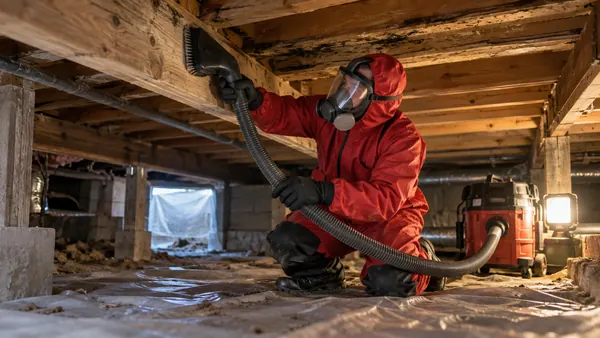
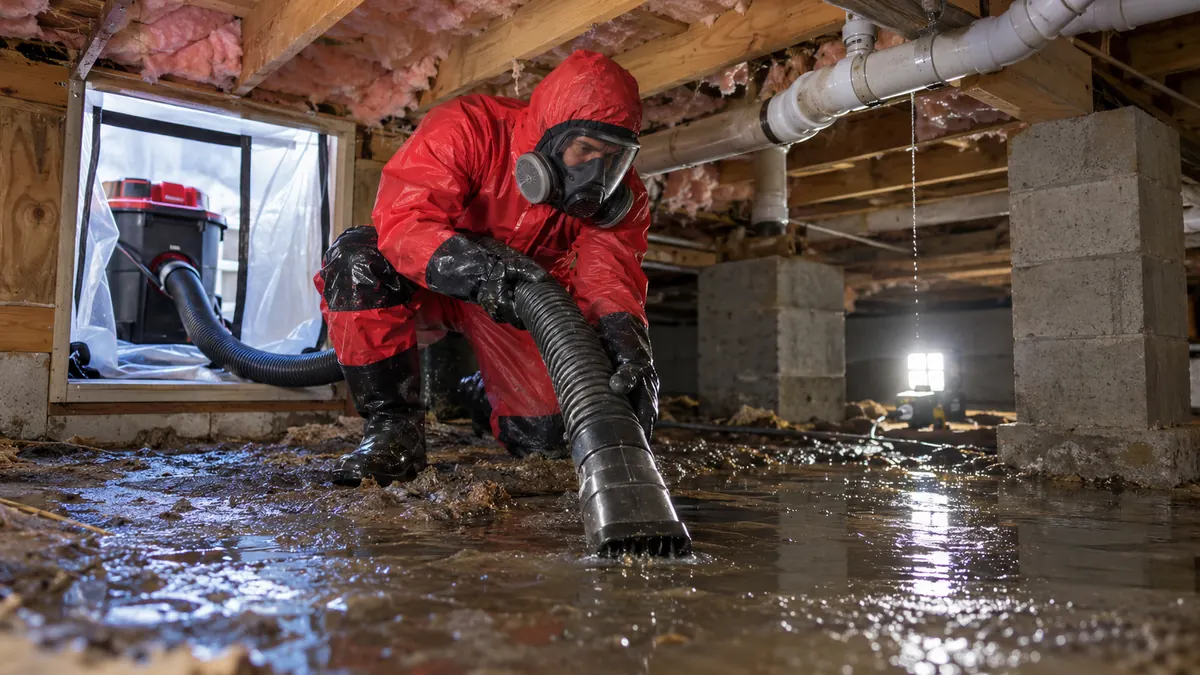
Black water carries bacteria and viruses, so the crew works in suits, gloves, boots and respirators, and the crawl space is sealed from the house. Air from the crawl space can move into the living area through floor penetrations, so we control it.
After the job, ask for a written summary of what was removed, what was applied and when. Keep it with your records. If anyone in the house has a weakened immune system or breathing trouble, tell us at the start so we can plan around them.
Safety steps before the crew arrives
- Stay out of the crawl space and keep children and pets away
- Stop running water in the house, especially toilets and the washer
- Do not turn on the HVAC if the ducts run under the house
- Wear gloves and boots if you must touch anything wet
- Call a plumber for the line and a restoration crew for the cleanup
- Photograph what you can see from the access opening
How we decontaminate a crawl space
Set up protection
Crew members wear suits, gloves, boots and respirators. We seal the access so air from the crawl does not drift into the house.
Remove the water
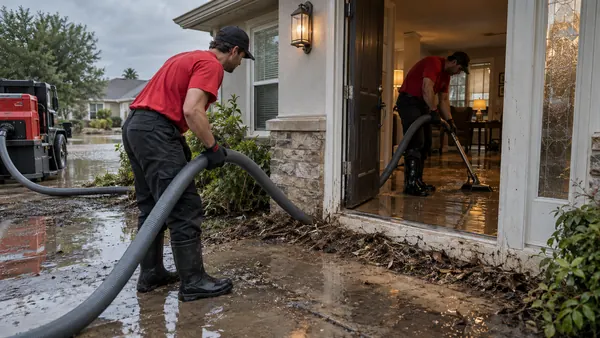
Pumps and extractors take out the standing waste. It is hauled and disposed of, not dumped in the yard.
Take out what the waste touched
Wet insulation, vapor barrier and contaminated debris come out, bagged and removed.
Clean the framing and soil
Joists, subfloor and piers are cleaned of residue. Heavily soiled soil is scraped and replaced as needed.
Disinfect
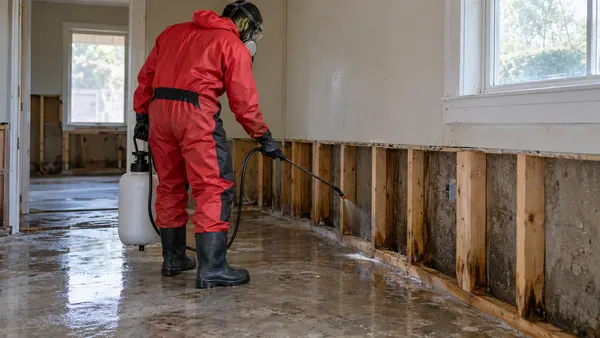
A hospital-grade disinfectant is applied to all surfaces the waste touched, and left to dwell for its label time.
Dry and verify
Dehumidifiers and air movers dry the space. We take moisture readings of the wood before we close up.
Category 3 water, in plain terms
Restoration people sort water into three categories. Category 1 is clean supply water. Category 2 is gray, from washers and dishwashers. Category 3 is black water: sewage, toilet backups and floodwater from the ground. It carries bacteria and viruses, and porous materials it touches cannot be cleaned, only removed.
That is why we do not dry a sewage loss in place and hope. Insulation, pad and fiberglass come out. Framing and subfloor are cleaned and disinfected. A crawl space that is merely pumped out and left damp is a long-term odor and mold problem.
Problems we find in sewage losses
- Insulation that wicked waste up into the subfloor
- A vapor barrier that holds contaminated water against the soil
- Ductwork that runs through the crawl and pulls odors into the house
- A broken lateral that nobody has located yet
Crawl space sewage cleanup cost
A typical estimate for sewage cleanup in a crawl space runs about $2,500 to $9,000. Size, depth of waste, insulation removal and soil work move the number. Fixing the sewer line is a plumber's cost. These are typical estimates, not guaranteed prices. Call for an exact quote. See all price ranges.
Questions we hear about this
Is it safe to stay in the house?
Not always. If sewage is under the home and odors are inside, many families stay elsewhere until cleanup. We tell you what we see after we look.
Will insurance pay?
Sewer backup coverage is often an endorsement, not part of a standard policy. Ask your agent. We give you a written scope and photos for the claim.
Can you save the insulation?
No. Insulation that touched sewage is porous and comes out. Dry insulation above the waterline may stay.
Who fixes the sewer line?
A plumber does. We often work in the same week, so the line is repaired and the space is cleaned.
Will the smell go away?
Usually yes, once the waste, wet wood and insulation are removed and the space is disinfected and dry. We check the air and the wood before we finish.
Where we see this most
- Suwanee, GAPier-and-beam and vented-crawl homes near the Chattahoochee buffer where groundwater sits high.
- Chamblee, GA1950s bungalows with old clay laterals and low crawl clearance.
- Duluth, GAVented crawl spaces on 1980s to 2000s homes where waste pools on damp soil.