Why sump pumps fail when Gwinnett storms hit
A sump pump earns its keep during the worst weather, and that is when it is under the most strain. The clay across Gwinnett stays saturated for days, so a pump that would idle in an ordinary spring can run around the clock after a stalled front.
The usual causes are plain. Storms knock the power out, and a pump without battery backup stops with the lights. Floats jam against the pit wall. Switches burn out after years of cycling. Discharge lines freeze or get kinked, or discharge so close to the house that the water cycles right back into the pit.
What the crew does
Safety first
We check where the water is relative to outlets, the panel and any gas appliances, and kill power to the wet circuits.
Pull the water out
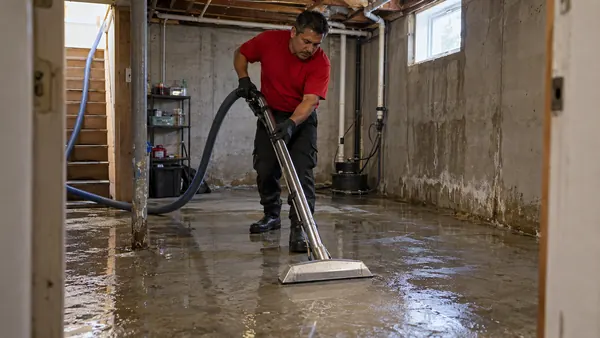
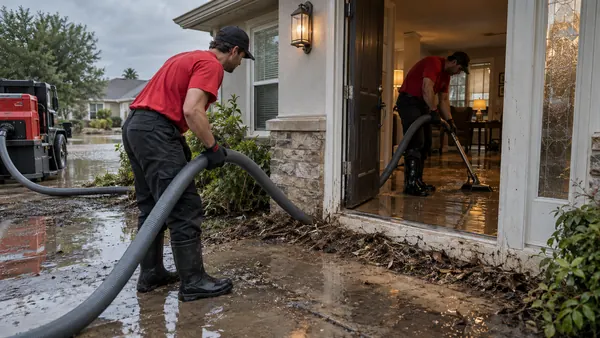
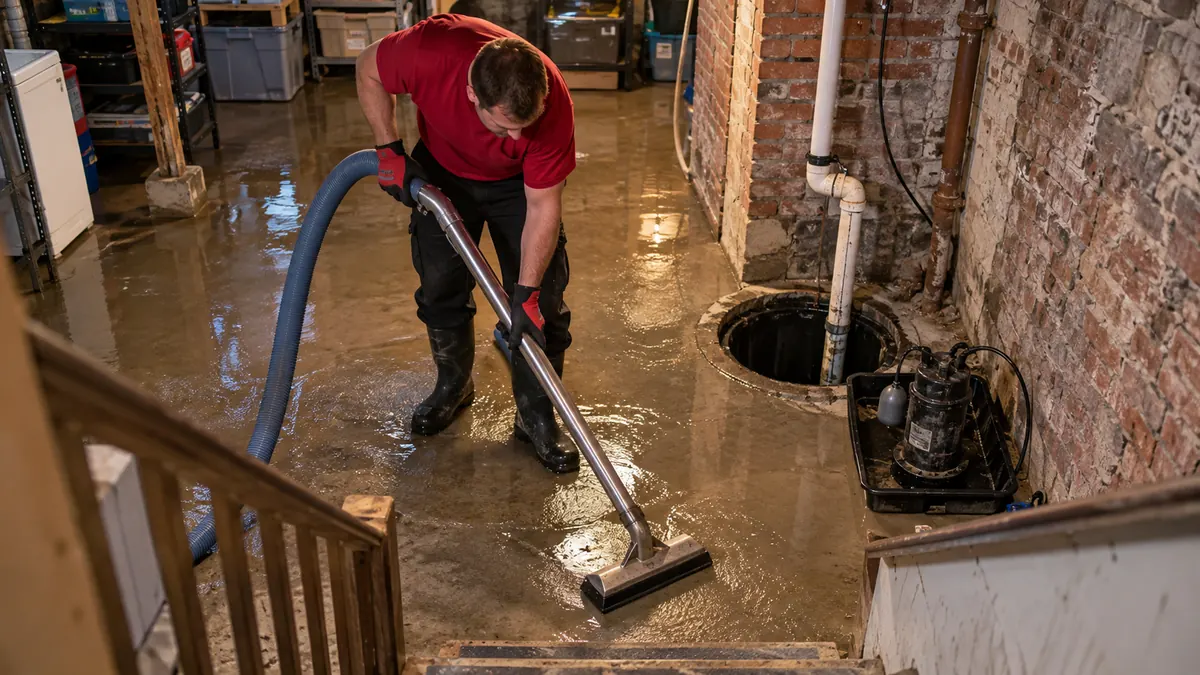
Submersible pumps and wand extractors clear the floor and the pit. We check whether the pit is receiving groundwater or just stormwater runoff.
Sort the contents
Wet cardboard, upholstered items and carpet pad go out. Hard goods and tools are wiped down and set aside to dry.
Clean the floor and wall base
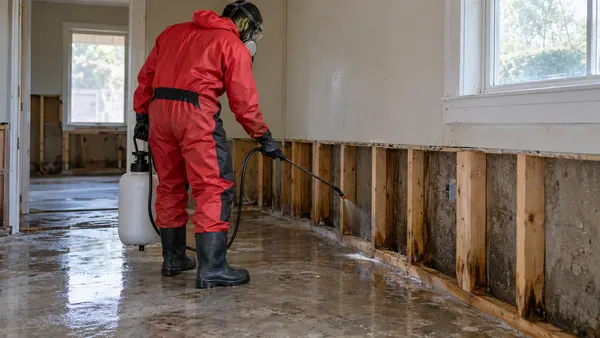
Slab, cove joint and the bottom of the walls are cleaned and treated, since basement water can carry soil and bacteria.
Dry the space
Dehumidifiers and air movers run until the slab and wood read dry. Basements dry slowly in summer, so we watch the humidity closely.
Report on the pump
We note what we saw at the pit, such as a stuck float or a kinked line, so you or your plumber can fix the cause.
What a sump pit is supposed to do
A sump pit collects groundwater at the lowest point of the basement or crawl space. The pump lifts that water out through a discharge line and away from the house. When the pit is too small, the line is short or the pump is old, the system falls behind during a long rain.
We do not size or install pumps, but we see the common problems. A pit that is shallower than the water table around it. A float that jams against the wall. A check valve that has failed. A discharge line that empties near the foundation and sends the water straight back.
What a failed sump pump looks like
Sometimes you hear the failure before you see it.
- A pit full to the rim with no sound of the pump running
- A pump that hums but does not move water
- Water rising at the pit and spreading across the slab
- A basement floor drain that burbles or backs up in heavy rain
- A pump that runs constantly for days and then goes quiet
- A musty smell near the pit after a storm
Backup power and the pit itself
We do not replace sump pumps, but we see enough failed ones to tell you what matters. A battery or water-powered backup keeps a pit working when the grid goes down. A second float switch gives the pump a fallback. A pit lid keeps debris out and humidity down.
After a flood we also look at where the discharge line ends. If it terminates close to the foundation on the uphill side, the pump can end up recycling the same water. A plumber or drainage contractor can lengthen the line away from the house.
After the flood: getting ready for the next storm
The week after a flood is the time to fix the cause, while the weather is calm. A plumber or drainage contractor can replace a worn pump, add a battery or water-powered backup and extend the discharge line.
Meanwhile, a few habits help.
- Test the pump each season by pouring water into the pit
- Keep the pit lid on and the area around it clear
- Check the discharge line outside for kinks and clogs
- Know where the lower-level breaker is
- Keep valuables off the basement floor
While you wait
- Do not wade into water that might touch outlets or the panel
- Turn off the breaker for the lower level if the panel is dry and reachable
- Check the discharge line outside for a kink or ice
- If the power is out, do not run a generator inside the house
- Lift boxes and furniture to the stairs or upper floors
- Photograph the water level and the pit
Usual trouble on these calls
- A finished basement with carpet over a wet slab
- Electronics and stored files in low shelves
- A pit that is shallower than the groundwater around it
- Homeowners who bailed for hours before calling
Sump pump flood cleanup cost
A typical estimate for a flooded basement cleanup is about $1,200 to $6,000, depending on how deep the water got and what is finished. Replacing the pump is a plumber's job and is separate. Estimates only, not guaranteed prices. Call for an exact quote. See all price ranges.
Questions we hear about this
Is basement water from a failed pump covered?
Many standard policies exclude water that seeps in from the ground, and some cover sump failure only with an endorsement. Check the wording and call your agent early.
Can the pump be repaired?
Sometimes a float or switch can be replaced. After years of service, many owners replace the whole pump and add a battery backup. A plumber handles that.
Is the water safe to touch?
Treat it as dirty. Basement water can carry soil, oils and bacteria. Wear boots and gloves, and keep children and pets out.
How fast should I call?
Right away. Wet drywall and cardboard feed mold quickly in a humid basement, and the clock on that starts when the water arrives.
What if the pit keeps refilling?
We keep pumping while the clay is saturated. Once the weather settles, we dry, and a drainage contractor can look at the long-term fix.
Where we see this most
- Tucker, GAFinished daylight basements where a failed pump floods carpeted living space.
- North Druid Hills, GAHillside homes with converted crawl spaces that rely on a single pit.
- Roswell, GATerraced lots where retaining-wall runoff overloads the pit.
Read next The first hour after a sump pump fails.