Where mold shows itself
You often smell it before you see it.
- A musty, earthy odor that is stronger after rain or in the morning
- Dark spots or fuzzy patches on drywall, ceilings and closet walls
- Paint that bubbles, peels or stains in rings
- Wood trim that feels soft or looks black at the seams
- Allergy symptoms that ease when you leave the house
- Condensation on windows or on cold HVAC ducts
Why mold takes hold so easily in Georgia homes
Georgia summers hold a lot of moisture in the air. A house that is cooled by air conditioning can have surfaces cooler than the outside dew point, and humid air condenses on them. Ducts, window sills and the back of cold exterior walls collect water without any leak at all.
Add the actual leaks, such as a toilet supply line, a dishwasher hose, a roof flashing or a cracked drain, and mold finds all it needs inside drywall and insulation. Most growth we see started with water that was never fully dried, often from a loss that happened months before the stain appeared.
Types of growth and what they mean for the work
People ask about colors and species. Color does not tell you how serious growth is, and only a lab can identify a species. What matters for the work is how much is present, what it grew on and how wet the material still is.
Growth on a dry, sound surface can often be cleaned. Growth in porous materials, such as drywall, insulation and ceiling tile, is removed. Growth in wood framing is cleaned and the wood is dried, unless it is rotted.
How remediation works
Find the moisture
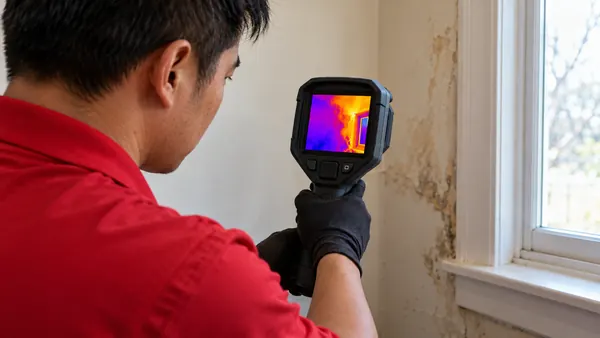
A moisture meter and a thermal camera show where the damp is. If we do not find and fix the water, nothing else matters.
Contain the area
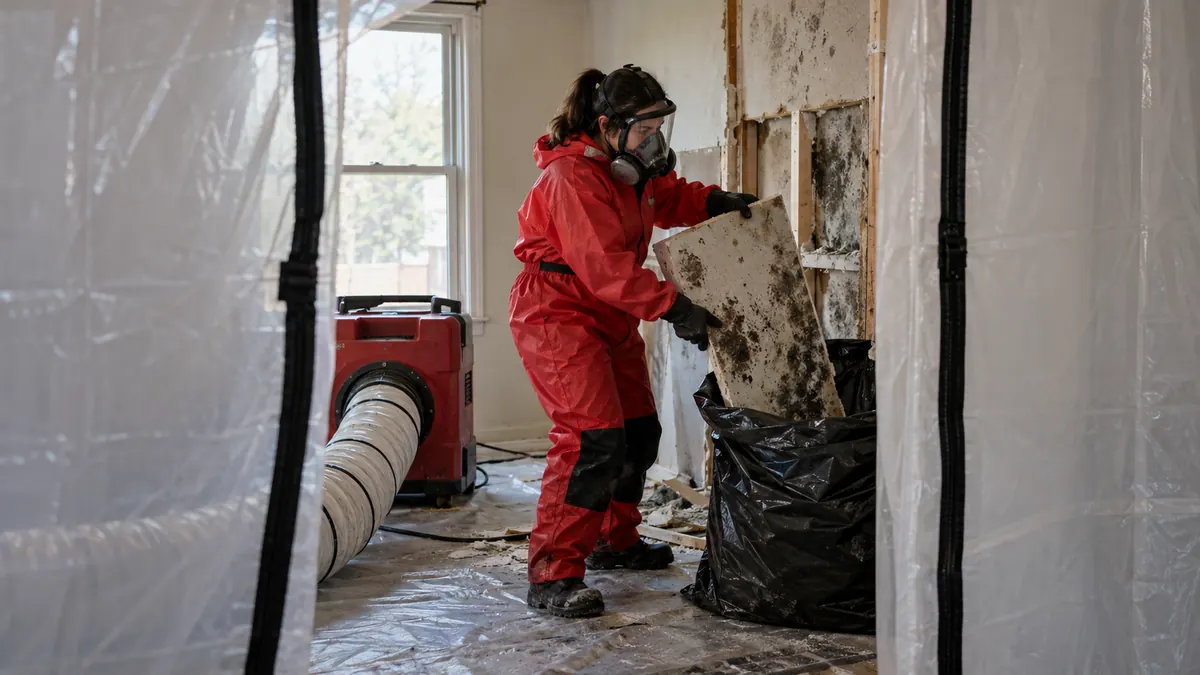
Plastic sheeting and negative air keep spores from drifting into clean rooms while we work.
Filter the air
HEPA air scrubbers run throughout the job and capture airborne particles.
Remove affected materials
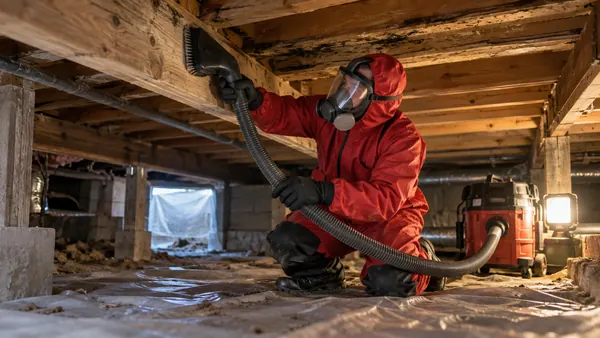
Drywall, insulation and porous materials with growth are cut out, bagged and removed. Framing is cleaned with HEPA vacuums and brushes.
Treat and dry
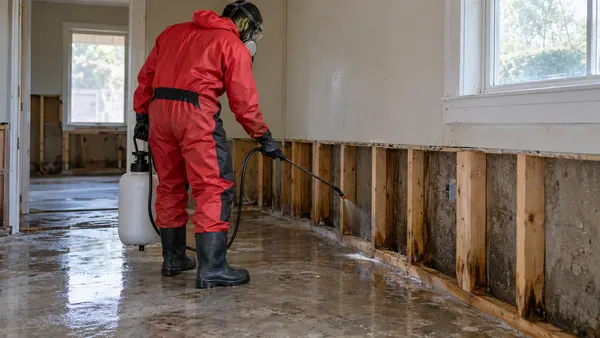
Surfaces are cleaned and treated, then dehumidifiers dry the cavity until readings are steady.
Check and close out
We confirm the area is clean and dry and give you written documentation. Rebuilding is a separate trade.
Why we fix the water before we remove the mold
Mold is a symptom. A wall that is damp will grow it again after any cleanup, however thorough. That is why our first step is always the moisture source. A leaking line gets repaired by a plumber, a roof leak gets patched, and a crawl space with standing water gets dried and managed.
We also tell you plainly what we can and cannot promise. Mold spores are in the air everywhere. Our goal is to remove growth and the conditions that feed it, not to produce a sterile house, and anyone who says they can is selling you something.
Mold problems we run into
- Growth behind wallpaper, vinyl or baseboard where no one looks
- Closets on exterior walls with no airflow
- Wet insulation above a bath fan that vents into the attic
- Water-stained ceiling tile or drywall that was painted over
Air filtration and what HEPA does
A HEPA filter captures very small particles, including mold spores. We run HEPA air scrubbers throughout a job and use HEPA vacuums on framing and surfaces. Negative air keeps the work zone at lower pressure than the rest of the house, so air flows in, not out.
These tools do not make a house sterile. They keep the work from spreading growth to clean rooms, and they remove particles stirred up by the removal.
Before you call
- Do not disturb or scrub visible growth. It spreads spores
- Turn off fans pointed at the affected room
- Close the door and tape the room if you can do so safely
- Fix or stop the leak, even if it is small
- Photograph the area and note when you first saw it
- Keep children, pets and anyone with breathing trouble away
Mold remediation cost
A typical estimate for mold remediation runs about $1,500 to $8,000 for a room or two, and more for whole-house or crawl space work. Containment, material removal and air scrubbing drive the number. Typical estimates only, not guaranteed prices. Call for an exact quote. See all price ranges.
Questions we hear about this
How do I know it is mold?
Dark or fuzzy growth on drywall, wood or ceilings, plus a musty smell, usually is. If you are unsure, call and describe it, or use thermal imaging to check for damp behind a wall.
Is black mold more dangerous?
Color does not tell you how risky it is. Any growth should be handled with the same care, whatever color it is.
Can I just use bleach?
Bleach does not solve a wet cavity and can leave moisture behind on porous materials. Remove the damp material and dry the wall.
Will my insurance cover it?
Many policies cover mold that follows a covered water loss and exclude mold from long-term seepage. Ask your agent and keep our documentation.
Do I have to leave the house?
Usually not for a contained room. Larger jobs, or anyone with respiratory trouble, may warrant staying elsewhere. We will tell you what we see.
Do you test the air?
We can work alongside an independent tester if you want one. We do not sell test results.
Where we see this most
- Roswell, GAHillside subfloors and hard-to-reach cavities near the river basin.
- North Decatur, GA1920s to 1950s bungalows with chronic crawl-space humidity and old drains.
- Sandy Springs, GAWalk-out basements and subterranean garages in contemporary rebuilds.