Signs hardwood is taking on water
Wood tells you, but slowly.
- Edges that look raised, called cupping
- Boards that crown in the middle or lift off the subfloor
- Gaps that open between boards after they dry
- A dull, cloudy look to the finish
- A hollow sound when you tap the floor
- A spongy feel near a dishwasher, fridge or sink
Why hardwood floors here are at risk
Hardwood is common in north Atlanta homes, from classic oak in older ranches to engineered wood in newer builds. Georgia humidity is already high, so a floor that gets wet starts from a damp baseline.
Water gets under hardwood from a dishwasher or refrigerator line, a leaking sink, a slab leak or a wet crawl space below. It moves through the seams into the subfloor and the underside of the boards. The longer it sits, the more the wood swells and the less likely it is to flatten.
Solid, engineered and glue-down: what we can save
Solid tongue-and-groove hardwood has the strongest chance, because the boards are thick and can be dried and refinished. Engineered flooring has a thin top layer over plywood or composite, and it can delaminate when wet. Glue-down floors trap water against the slab and are the hardest to save.
We tell you in the first visit what kind of floor you have and what the odds are, based on how long it was wet and how it is installed.
How a drying mat system works
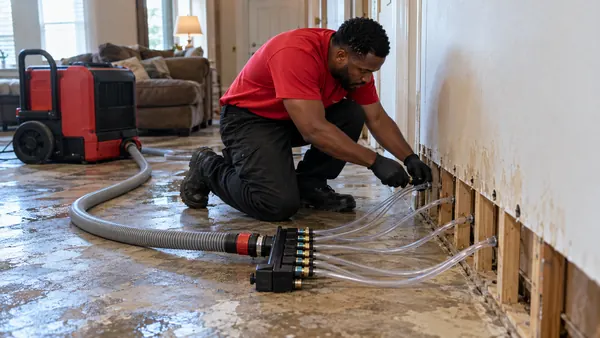
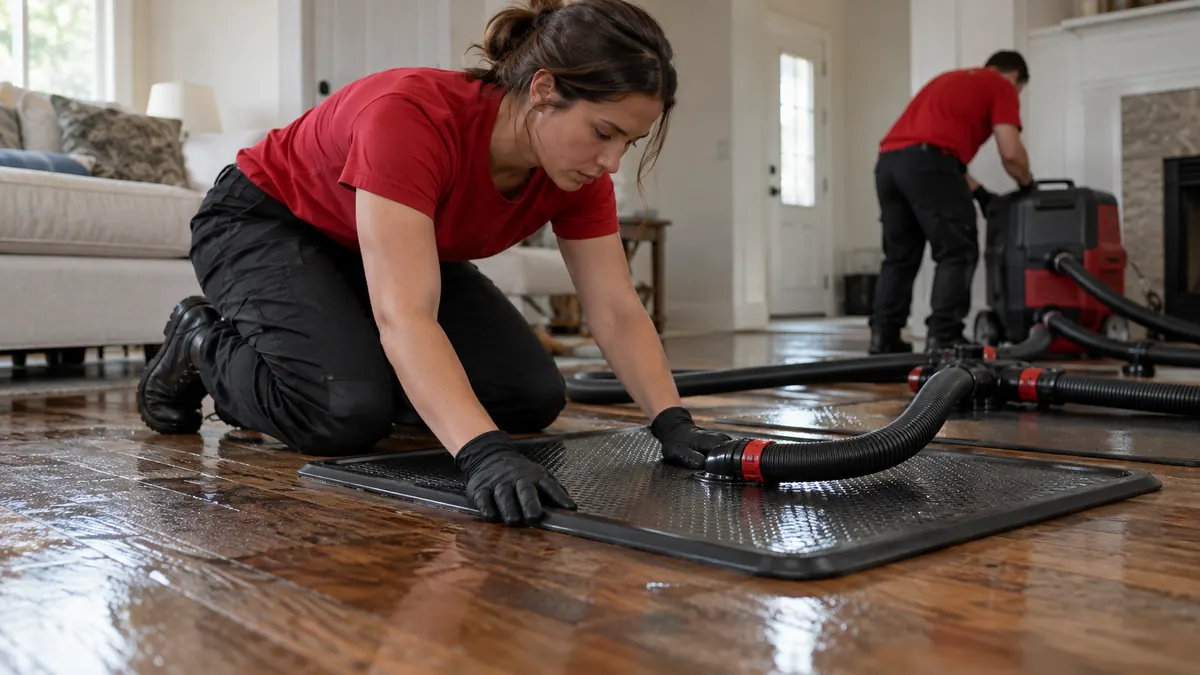
A mat is placed on the floor and sealed with a hose to a vacuum unit. The vacuum draws air through the boards and the subfloor, and pulls water vapor and trapped water out through the seams. Dehumidifiers remove the moisture from the room.
The key is speed. If boards have not yet begun to cup, drying mats within a day or two give the strongest odds. If they have, we may dry them slowly to let them relax, and sand and refinish later. We tell you honestly when a floor is not worth saving.
How we dry a hardwood floor
Find the extent
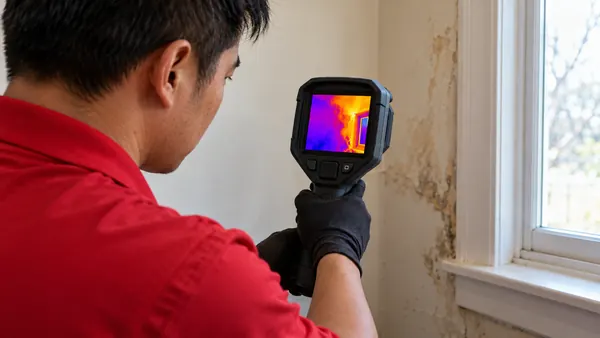
A moisture meter and thermal camera map how far the water went, including below the floor.
Extract water
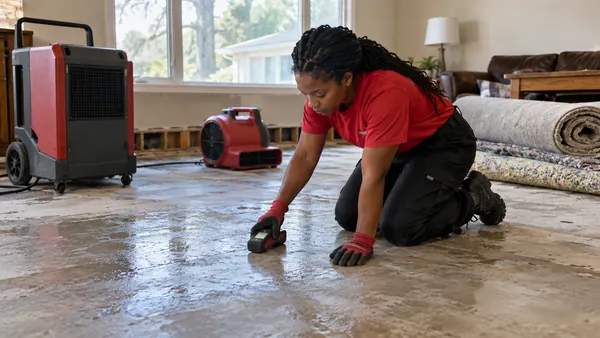
Light extraction removes water from the surface and from visible seams.
Place the mats
Drying mats are set and sealed, and the vacuum runs 24 hours.
Control the room
Dehumidifiers dry the air and a gentle heat can help. Fans are used sparingly, because rapid drying can crack boards.
Read each day
We take readings on the boards and the subfloor and move the mats as zones dry.
Decide
When the floor is dry, we tell you if it can be sanded and refinished or if sections need to be replaced.
What can sink a hardwood save
- Water that sat for more than a few days
- Glue-down or engineered floors that delaminate
- A sealed subfloor that traps moisture
- Dirty water that stains the wood
After drying: sanding, refinishing and when to wait
A floor that has been dried is not ready for finishing right away. Boards need to settle to the humidity of the house, which can take a week or more after the equipment is gone. Sanding too early traps moisture and can cause new cupping.
A flooring contractor should check the moisture content before sanding. We provide readings that show the floor has returned to a normal range.
What to do right away
- Stop the leak and wipe the surface
- Remove rugs and mats that cover wet wood
- Open no windows if the air outside is humid
- Do not use heat guns or fans aimed at wet boards
- Photograph the floor and note the date
- Call before boards start to cup
Hardwood drying cost
A typical estimate for drying a hardwood floor with a mat system runs about $1,000 to $4,500, depending on the area and the days of equipment. Sanding and refinishing are separate. These are typical estimates, not guaranteed prices. Call for an exact quote. See all price ranges.
Questions we hear about this
Can any hardwood be saved?
Solid tongue-and-groove floors have the strongest odds. Engineered, laminate and glue-down floors are harder.
How soon do I need to act?
Within a day or two is ideal. After a week, most floors have cupped.
Will the floor look the same?
Often yes after drying and refinishing. Sometimes some boards need replacement.
Do you refinish floors?
No. A flooring contractor handles sanding and finishing. We dry the wood.
Will the vacuum damage the floor?
No. The system is designed for wood floors and sealed with care.
Where we see this most
- Roswell, GAHistoric homes and hillside custom builds with solid hardwood.
- North Atlanta, GAGrand brick-veneer homes with wide-plank floors.
- Chamblee, GAPier-and-beam bungalows with original hardwood over damp crawl spaces.
Read next How Georgia homeowners insurance treats water damage.