






Erosion and silt
Sandy Springs has steep ravines with eroded clay banks. In a cloudburst, rain washes silt and debris down the slope.
That silt carries into driveways and garage doors, and it clogs drains. Where drains clog, water backs to the door.
Rebuilds with deep lower levels
Infill rebuilds often include basements, garages below grade and long concrete driveways that funnel water to a single point.
A modern foundation is tighter than an old one, but a door threshold or a failed drain can still let a lot of water in. Settling or erosion beneath the foundation can shift piers, so we flag it.
Problems Sandy Springs homeowners run into
- Silt that clogs driveway drains
- Cloudbursts wash clay silt down the slope. It fills the trench drain and the water goes to the garage door instead.
- Garage door slots that flood the basement
- Below-grade garages open to a long driveway. Water that gets past the door seal spreads into adjoining rooms.
- Ejector and sump pump failures
- A basement bathroom or media room depends on a pump. When it quits, the room floods from the inside.
- Leaks between condo units
- Mid-rise buildings and townhomes share pipes and ceilings. A leak in one unit wets the one below.
A typical Sandy Springs call
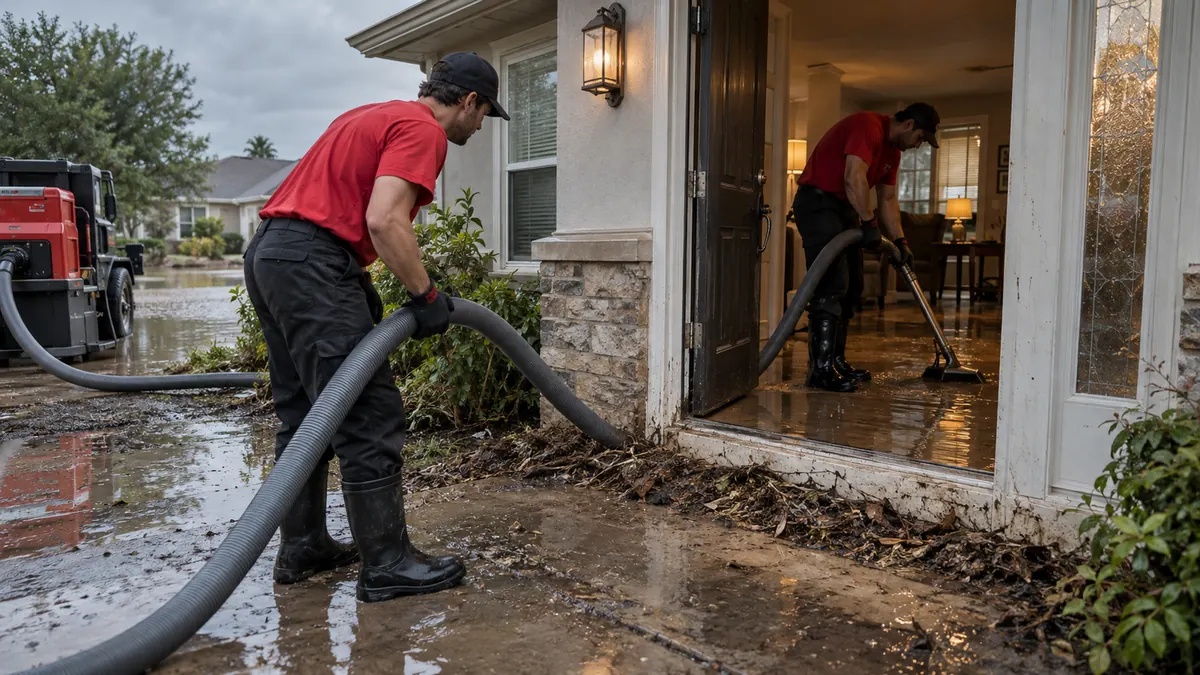
A steep driveway runs down to a below-grade garage in a recent rebuild. During a summer cloudburst, silt washes down the drive, plugs the trench drain at the bottom and water goes under the garage door into the garage and then into the basement media room through a door that is not sealed at the threshold.
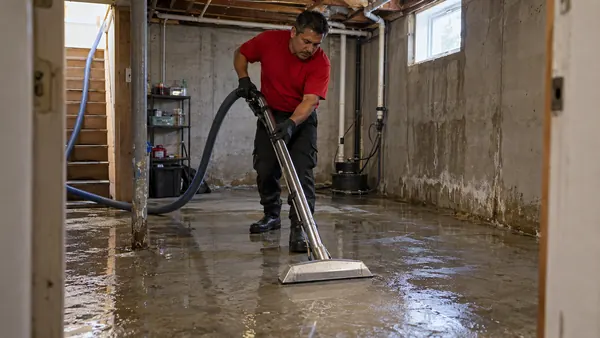
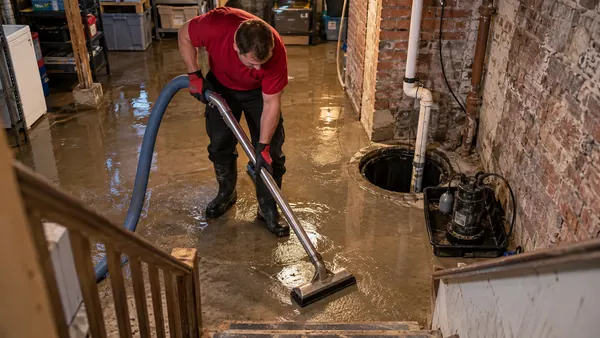
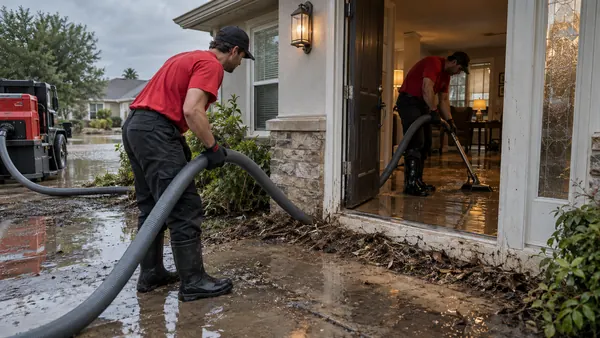
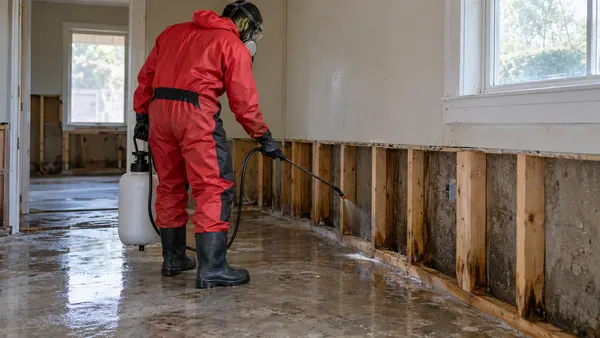
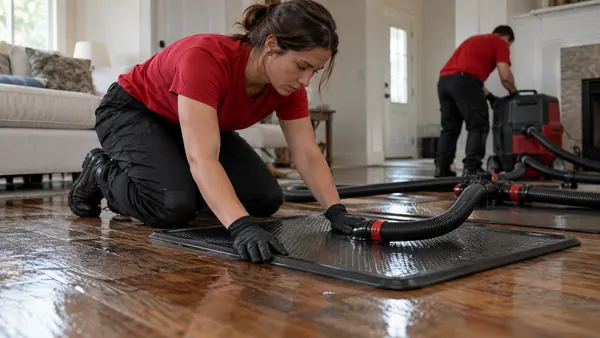
We arrive to two inches of muddy water. Pumps and wand tools clear the garage first, then the media room. We shovel silt out by the bucket before it dries, remove the carpet and pad, cut the bottom of the drywall and clean the slab. Floodwater is treated as dirty, so the surfaces are cleaned and treated before drying.
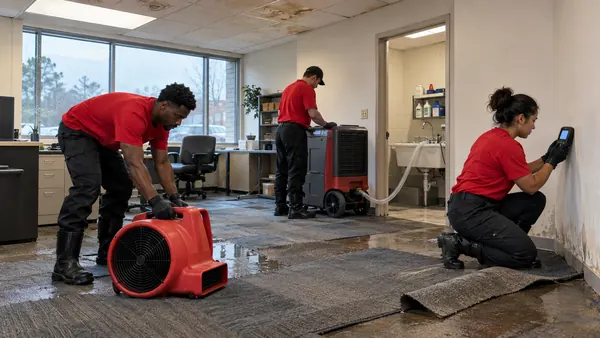
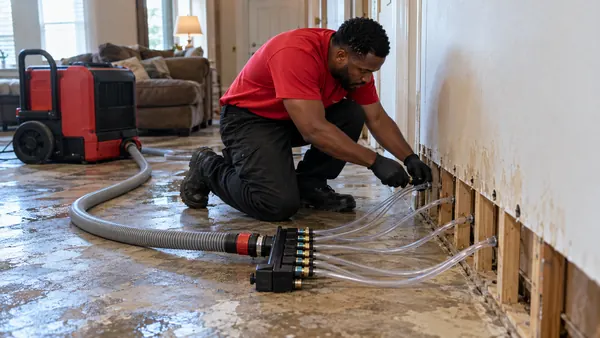
Dehumidifiers run for several days, and we read the slab and the framing each visit. Our report points to the clogged trench drain, the garage door seal and the threshold of the basement door as the entry path. The owner and the builder have the photos to decide what to change before the next storm.
Handling the driveway and the garage door
On a steep lot, the driveway acts like a funnel. A trench drain across the bottom helps if it is kept clear of silt.
Check it before storm season, and look at the seal at the bottom of the garage door.
- Trench or grate drain at the driveway bottom clear of silt
- Garage door seal intact
- Basement door threshold sealed
- Sump or ejector pit tested
What we tell Sandy Springs homeowners
Newer rebuilds are tight, which helps in some ways and hurts in others. When water does get in, it has little ventilation to leave by, and a lower level can stay damp for weeks behind finished walls.
We lean on readings, not appearances. A basement can look and feel dry while the bottom plate behind the drywall is still wet, so we check those points before anyone closes the walls. We also look at the garage level, since a subterranean garage can hold water long after the driveway has drained.
How the year goes in Sandy Springs
Summer cloudbursts are the main flood risk on steep lots. Spring rain fills ravines. Winter cold catches pipes in rebuilds that were left empty during construction.
Winter and burst pipes in Sandy Springs
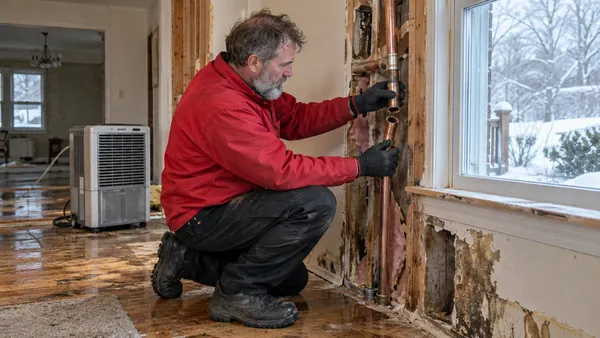
Rebuilds in Sandy Springs sometimes sit with lines in unfinished spaces, and condos share stacks and ceilings. One freeze can send burst pipes through a wall into several units, so coordination with owners and managers matters.
Water Damage Restoration Cost in Sandy Springs, GA
Sandy Springs basements and garages fall into these bands. They are typical estimates, not guaranteed prices.
| Job type | Typical estimate |
|---|---|
| Flash flood cleanup of a garage and basement | $2,000 – $10,000 |
| Multi-room mold removal | $1,500 – $8,000 |
| Antimicrobial treatment after silt and floodwater | $300 – $2,500 |
| Slab leak dry-out in a rebuild | $1,500 – $6,000 |
| Sump or ejector pump failure cleanup | $1,200 – $6,000 |
| Condo or townhome leak dry-out | $2,000 – $9,000 |
Typical estimates, not guaranteed prices. Plumbing, drainage and rebuilding are separate. Call for an exact quote.
What we get called for in Sandy Springs
- Low-Elevation Flash Flood MitigationDriveway runoff into garages and basements.
- High-Humidity Structural Mold RemediationMulti-room mold work in deeper basements.
- Post-Flood Antimicrobial TreatmentSilt and floodwater cleanup.
- Slab Leak Structural Dry-OutIn-slab lines in rebuilds.
Questions from Sandy Springs homeowners
Why does silt matter?
It carries bacteria and clogs drains, and it stains. We clear it early.
Do you handle multi-room mold?
Yes, under containment.
Can you dry a subterranean garage?
Yes, with dehumidifiers and care.
Do you work with drainage and landscape contractors?
Yes. We share moisture readings and photos so they can see where the water entered before they design a fix.
Nearby communities we also cover
Sandy Springs borders Dunwoody, Roswell and Buckhead and is a short run from Peachtree Corners.