What injectidry and desiccant units actually do
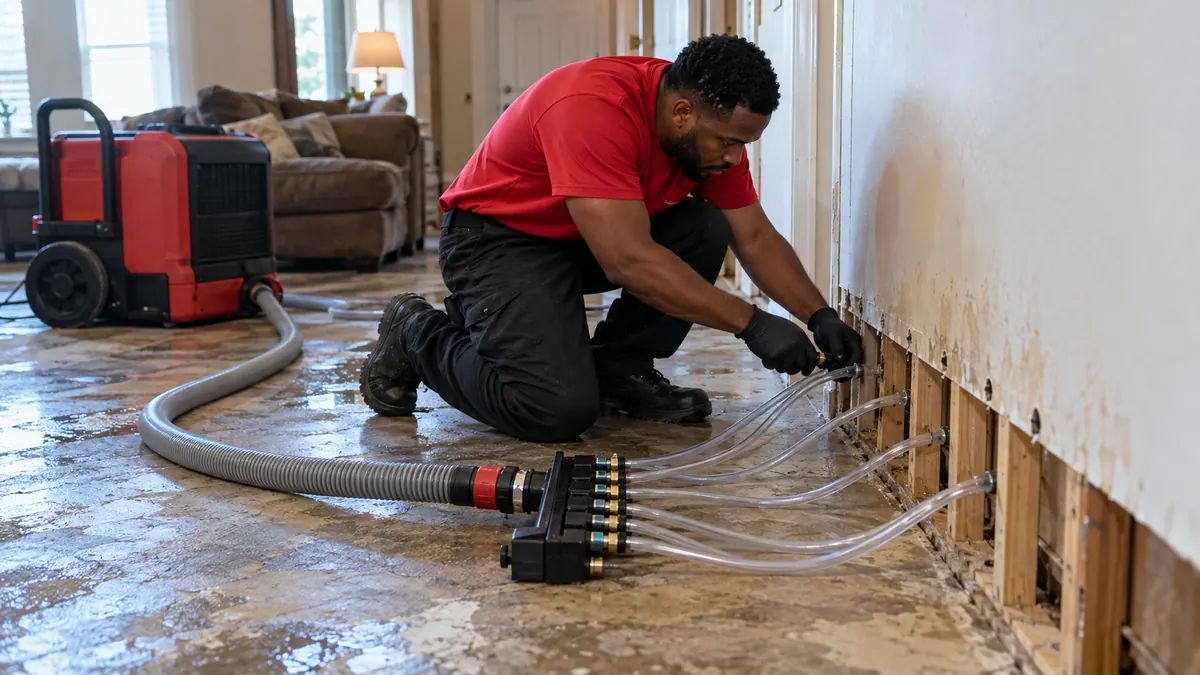
Small holes are drilled at the base of the wall, often behind baseboard or in the toe kick. A manifold connects hoses that push warm, dry air into the cavity. The air picks up moisture from the studs and drywall, and a dehumidifier takes it out of the room.
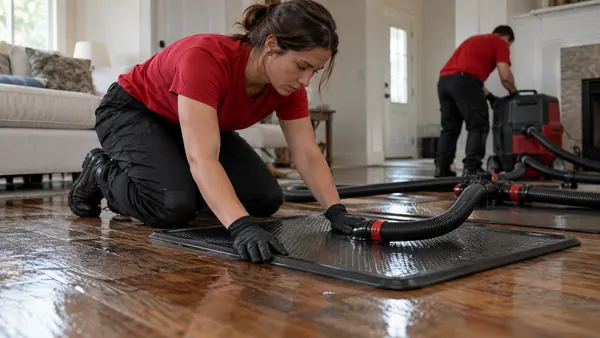
In cool or crowded spaces, desiccant dehumidifiers work better than refrigerant units. They pull moisture from the air even when it is not warm. We pick the equipment based on the room, the materials and the readings, not on a fixed formula.
When wall drying is an option
It depends on the wall and the water.
- Clean-water leaks from a supply line or appliance
- Newly wet drywall that is still firm
- High-end finishes, tile, built-ins or plaster you want to keep
- Cabinets and toe kicks holding water behind them
- A wet bottom plate and insulation behind a standing wall
- A loss caught within a day or two
Which materials respond to cavity drying
Gypsum drywall, wood studs and batt insulation that were wet with clean water for a short time respond well. Painted drywall can often be saved. Plaster is slower but possible. Spray foam and closed-cell insulation do not take up water, which helps.
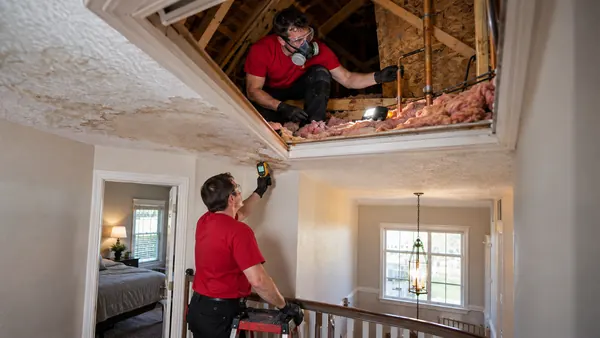
Fiberglass insulation holds water and is usually removed, even when the drywall stays. Dirty water, long exposure and visible growth shift the plan from drying to removal.
How we dry a wall cavity
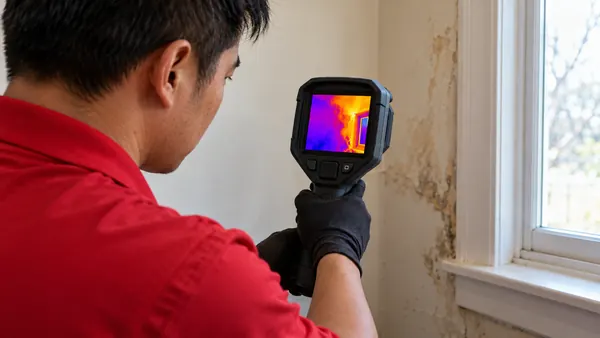
Map the wet area
A meter and thermal camera show how high the water rose in the wall.
Decide what stays
We check whether the drywall and insulation can be dried, or whether they have to be cut out.
Drill and connect
Small holes are drilled and sealed to a hose manifold. Baseboard is removed and reused when possible.
Run dry air
A dehumidifier and air movers push and pull air through the cavity, 24 hours a day.
Read daily
We return to check moisture readings and adjust the equipment.
Patch and finish
When walls are dry, the small holes are filled by the finish carpenter or painter.
Why drying behind walls matters here
A wall cavity is a closed box with insulation inside. Water that gets in does not dry quickly in Georgia humidity, because the air in the cavity is still and damp. Left alone, the wet bottom plate and the back of the drywall grow mold.
Many local homes have walls finished with textured drywall, built-in cabinets or custom millwork, and those are expensive to rebuild. Drying through the wall keeps what can be saved and avoids rebuilding finished rooms.
Why a wall may still need cutting
- Dirty water that left residue in the cavity
- Insulation that is soaked and compressed
- Mold already growing on the back of the drywall
- Wet plaster or tile that will not release moisture
How we protect trim, paint and cabinets
We remove baseboard carefully, number it and put it back. Holes go where they can be filled and hidden, such as behind baseboard, in toe kicks or inside cabinets. We set equipment away from fragile finishes, and we use heat and airflow gently so paint and wood trim do not crack.
On cabinets, the wet area is often behind the toe kick and under the sink. We open the least we can to reach it and dry it with directed air.
What you can do
- Shut off the water source and call quickly
- Remove baseboard only if we ask you to
- Move furniture away from wet walls
- Keep the thermostat steady so the dehumidifier can work
- Do not paint or seal a wall that is still damp
Wall cavity drying cost
A typical estimate for wall cavity drying runs about $800 to $4,000, depending on the number of walls and the equipment days. It can cost less than rebuilding finished walls. These are typical estimates, not guaranteed prices. Call for an exact quote. See all price ranges.
Questions we hear about this
Can any wall be dried in place?
Walls with clean-water damage that is caught early often can. Dirty water, long exposure or mold usually means removal.
Will the holes show?
They are small and sit behind baseboard or toe kicks, and are filled when drying is done.
How long does it take?
Three to five days is common. Heavy insulation or a humid week can extend it.
Is it noisy?
Dehumidifiers and air movers make noise. We place them to limit it and discuss quiet hours with you.
Does this work on plaster?
Sometimes. Plaster holds moisture, so we monitor closely and may use desiccant equipment.
Where we see this most
- Alpharetta, GACustom woodwork and built-ins in lower-level living areas.
- Dunwoody, GATraditional multi-level estates with finished daylight basements.
- North Atlanta, GABrick-veneer custom homes with detailed trim and plaster.
Read next How Georgia homeowners insurance treats water damage.