







What the ground does in Norcross
Under most Norcross yards is Piedmont red clay, the same heavy soil that covers much of Gwinnett. It soaks up water slowly and lets it go even slower. After two or three days of steady rain, the soil beside a foundation is full, and water starts to pool against the wall.
That behaves like a bowl. The clay holds the rain around the house, and the water that cannot drain down pushes sideways. Block and brick walls that stay dry in July weep at the floor joint in a wet April.
The houses we see
Historic Downtown Norcross has older stone and brick buildings with thick masonry foundations. The residential streets around it are mostly 1970s and 1980s homes, including split-levels and ranches with concrete masonry stem walls and partial basements.
Mortar joints in older block walls crack with the clay's swell and shrink. Cracks that hold up for years become seeps once the soil outside stays saturated, and finished lower levels with carpet are what suffer.
Problems Norcross homeowners run into
- Seepage at the cove joint of block walls
- After a long wet spell the clay beside a split-level fills up and pushes water through the joint where the wall meets the slab. It shows first as a damp line, then as wet carpet along the outside wall.
- Old mortar joints that let water in
- Downtown brick and older block walls carry decades of freeze and thaw, clay movement and tired mortar. Hairline gaps that never leaked in a dry year become steady weeps in a wet one.
- Wet paneling and carpet over a damp slab
- Finished lower levels hold water against the wall. Paneling, glued carpet and cardboard storage keep the slab wet long after the visible puddle is gone, and mold follows in the dark.
- Storefront and strip-center water
- Older retail along the commercial roads deals with flat roofs, clogged scuppers and floor drains that back up. One bad storm can wet three suites at once.
A typical Norcross call
A homeowner in a 1970s split-level calls on the fourth day of a wet April. The family room on the lower level looks fine, but the carpet along the back wall feels cold and damp, and there is a faint white crust on the block above the baseboard.
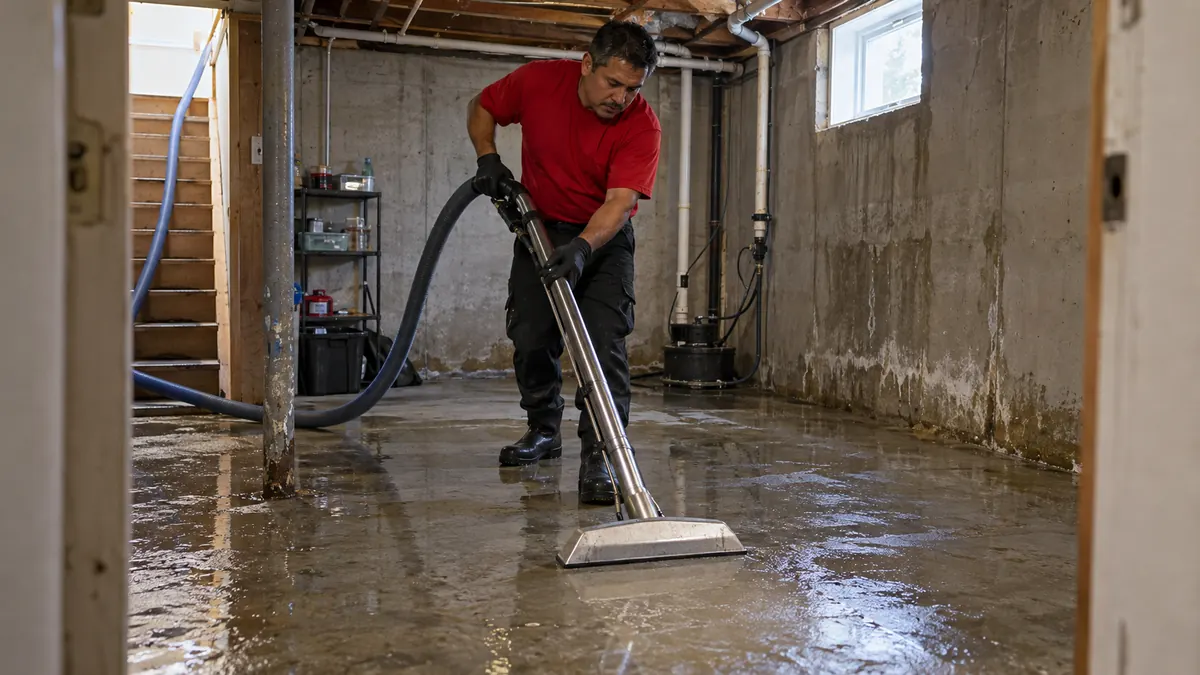
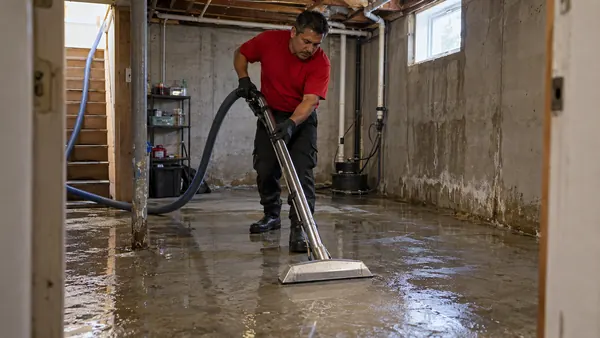
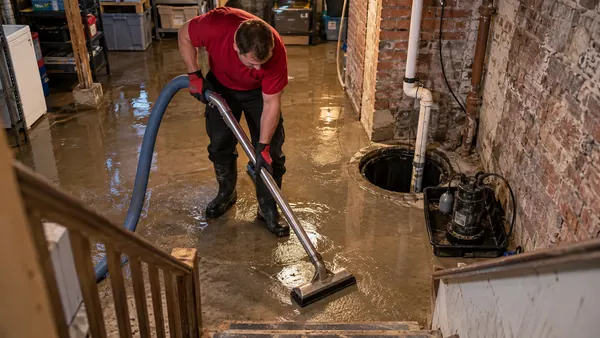
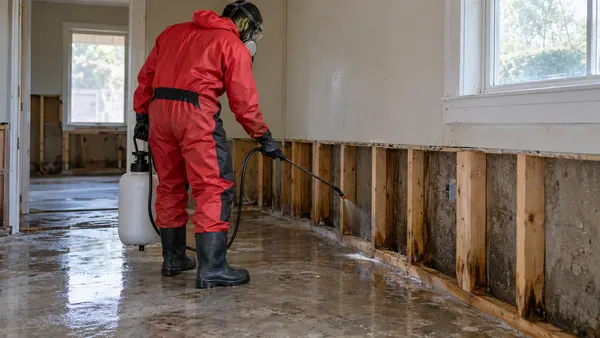
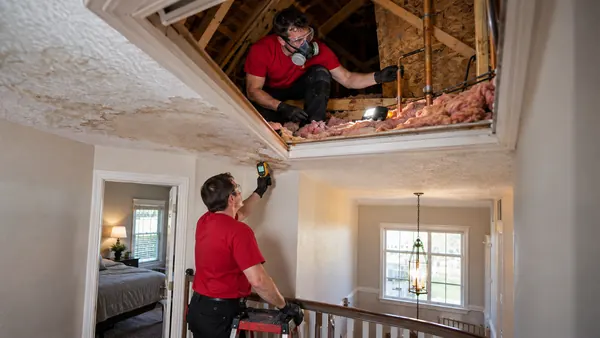
We start with a meter and a thermal camera. The reading is highest at the cove joint along the downhill wall and fades toward the front of the house, which tells us the water is coming through the wall, not from a pipe. We lift the carpet and pad along that wall, extract the slab, and cut a narrow strip of the paneling at the base so the wet insulation behind it can come out.
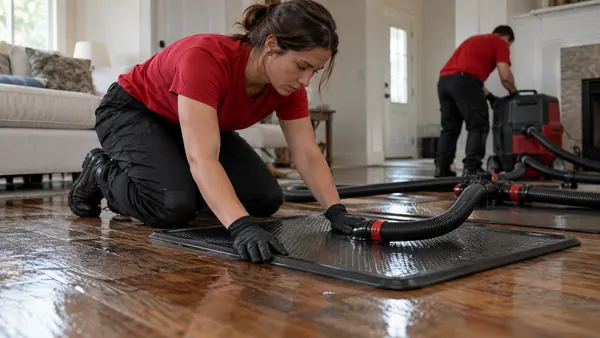
Dehumidifiers run for five days, and we are back each morning to read the wall and the slab. At the end the owner has a report that names the cove joint and the mortar line as the entry points, with photographs. That is what they hand to a waterproofing contractor, so the drain gets designed for the real problem.
What to check this week in Norcross
Walk the outside of the house the day before a long rain is forecast. On split-levels and older brick homes, the trouble usually starts at the same few spots.
Look at where the downspouts end, where the soil slopes and whether the cove joint inside already shows a chalky line from an earlier wet spring.
- Downspout extensions pointed several feet away from the foundation
- Soil and mulch that slope toward the block or brick wall
- White mineral crust along the lower wall inside
- Sump pit that fills and empties when you pour a bucket in
What we tell Norcross homeowners
Block and brick foundations can look tough and still weep in a wet spring. The white crust on the lower wall is a sign of water moving through, even when the floor stays dry.
Photograph it, date it and keep the photos. If a drainage contractor or an insurer asks how long it has been happening, your photos answer better than memory.
How the year goes in Norcross
Spring is the hard season. Stalled fronts keep the clay full for days, and basements weep on day three or four. Summer brings short, heavy thunderstorms that overload street drains. Fall is quieter, which is the right time to check downspouts and sump pits. Winter cold snaps catch pipes in garages and unheated additions.
Winter and burst pipes in Norcross
Winter trouble in Norcross tends to start in places the heat does not reach: unheated garages, additions behind older split-levels and long water lines in downtown buildings. After a hard freeze, burst pipes in these spots can wet a laundry room or a storefront back room before anyone arrives.
Water Damage Restoration Cost in Norcross, GA
Norcross jobs usually fall into a few familiar bands. These are typical estimate ranges for the metro Atlanta area, not guaranteed prices.
| Job type | Typical estimate |
|---|---|
| Clay-seep pump-out and slab drying, unfinished basement | $1,200 – $3,000 |
| Finished lower level with wall and carpet removal | $3,000 – $8,500 |
| Failed sump pump flood cleanup | $1,200 – $6,000 |
| Antimicrobial treatment of block and framing | $300 – $2,500 |
| Storefront or office storm dry-out | $2,000 – $30,000+ |
| Thermal scan to map hidden moisture | $250 – $900 |
Typical estimates, not guaranteed prices. Plumbing, drainage and rebuilding are separate. Call for an exact quote.
What we get called for in Norcross
- Hydrostatic Clay-Bowl Water ExtractionGroundwater seepage through block walls and cove joints after long rain.
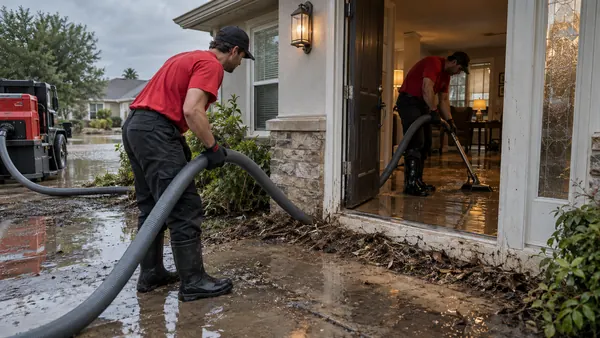
- Sump Pump Failure Flood CleanupPumps that quit when the grid goes down in a Gwinnett storm.
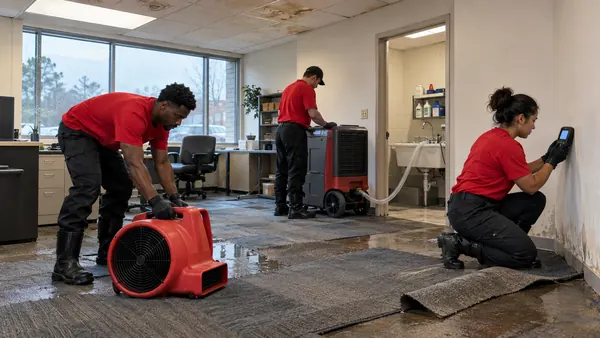
- Commercial Storm Damage Dry-OutStorefronts and offices near downtown and the commercial corridors.
- Post-Flood Antimicrobial TreatmentTreating framing and slabs after clay-silted floodwater leaves.
Questions from Norcross homeowners
Why does my Norcross basement leak only after long rain?
Clay takes days to fill. After several rainy days the soil is saturated and the pressure on the wall rises. That is why basements weep in a wet week, and not in a single downpour.
Can you waterproof my basement?
We dry it and document where the water entered. A waterproofing contractor installs drains, sealing or grading.
Do you cover Norcross businesses?
Yes. We dry offices and shops in phases so they can keep operating if possible.
How fast can you get to Norcross?
It is next to our base, and the emergency line is open 24/7. Call and tell us how deep the water is.
Nearby communities we also cover
Norcross touches Peachtree Corners, Duluth, Doraville and Lilburn. A single storm often floods several of them, and we work across all four.