Signs of a leak under the slab
Slab leaks hide for weeks. Look for a pattern, not a single stain.
- A water bill that climbs while nobody changed habits
- Warm spots on the floor, often in one line from the water heater
- The sound of running water when every tap is off
- Baseboards that swell or flooring that lifts at the seams
- Cracks or damp patches in the slab you did not see before
- A water meter that keeps turning with the main valve closed
Why slab homes here hide water so well
A lot of metro Atlanta houses from the 1970s through the 1990s sit on slabs or over slab-on-grade garages and additions. Supply lines run through or under the concrete, and after decades the copper wears from the outside, from minerals, flexing and the clay shifting around it.
When a line pinholes, the water has no basement to fall into. It travels sideways under the flooring, finds the lowest edge, and wicks up into the bottom plates of the walls. By the time a stain shows, several rooms are often wet underneath. Humid summers keep that hidden moisture from drying on its own.
How a slab leak is confirmed before anyone cuts concrete
A plumber confirms the leak with pressure tests and acoustic listening gear, which can narrow a break to a few feet. A thermal camera can also show a hot-water leak as a warm band on the floor. Before any concrete is opened, the plumber and we compare notes so the wet zone and the leak location agree.
That teamwork saves money. A repair that is planned around the wet area avoids opening walls twice, and drying can start at the same visit.
How we dry a slab leak loss
Confirm the area
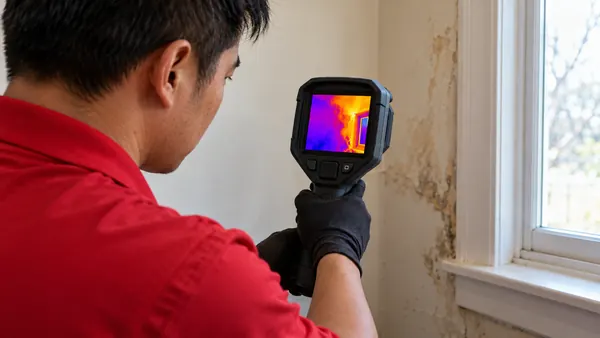
We read the floor, walls and baseboards with a meter and a thermal camera to outline how far the water went.
Open what has to open
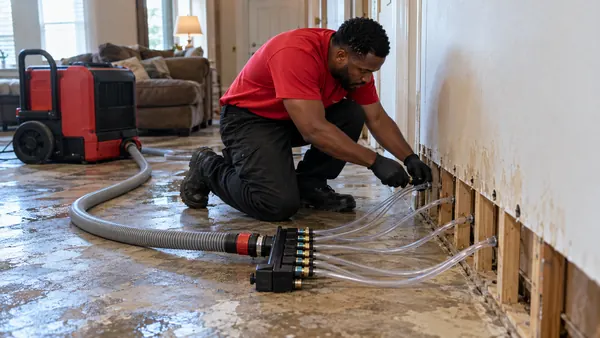
Flooring over the wet zone is lifted, and wet baseboard and the bottom of drywall are cut so air can reach the plates.
Pull trapped water
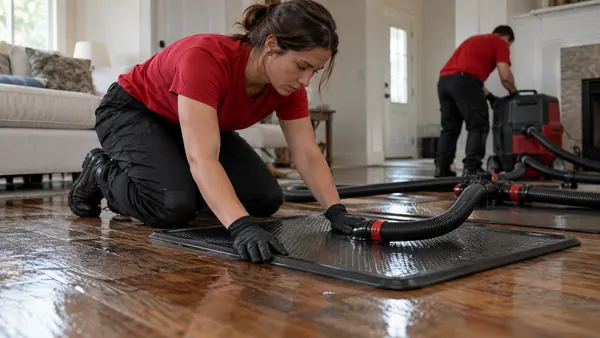
Floor drying mats and small extractors draw water from under hardwood or from pad that cannot be saved.
Dry the slab and framing
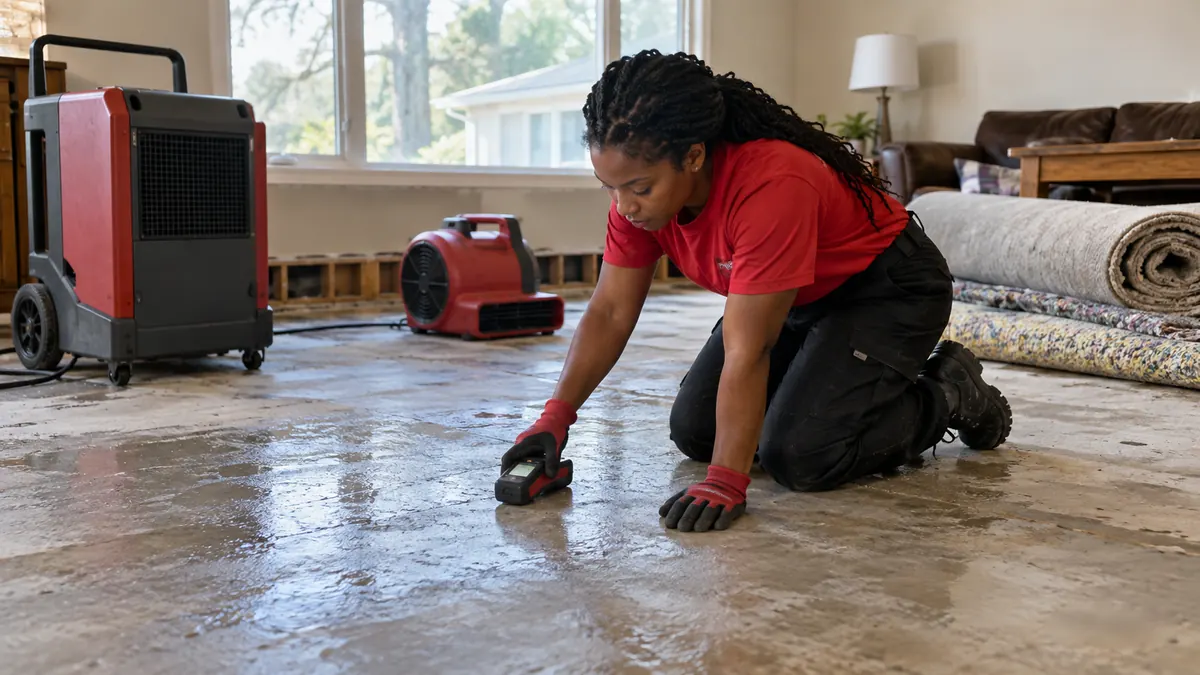
Dehumidifiers and air movers run in a closed room. Concrete releases water slowly, so we use low-grain equipment and track daily readings.
Coordinate with the plumber
We leave access where the plumber needs it, and we keep drying while the repair is going on.
Verify dry
Readings on the slab, plates and drywall are logged until they match a dry area of the same house.
Flooring over a slab: what stays and what goes
Floating floors and click-lock planks can often be lifted, dried and sometimes reused. Glue-down hardwood, glued tile and carpet with pad over the wet zone are harder. Moisture sits between the flooring and the concrete, and it does not dry through the top.
We will tell you which areas must come up and which can stay, based on readings, not guesses. Taking up the floor over the wet zone usually shortens drying by days.
- Floating floors: often reusable
- Glue-down hardwood: harder to save
- Carpet and pad: usually removed
- Tile: depends on the substrate and grout
When you suspect a slab leak
- Close the main water valve and see if the meter stops
- Take a photo of the meter dial before and after one hour
- Do not tile or lay new flooring over a floor you think is damp
- Keep the thermostat steady so the floor temperature is readable
- Call a plumber and a drying crew together
The plumber and the dry-out are different jobs
Finding and repairing the leak is plumbing work. Common fixes include repairing the line, rerouting it overhead or repiping the house. Most plumbers will tell you to get the water out while they work, and they will not want to tear into wet flooring on their own.
We try to work in step. When the plumber has located the break, we bring the drying equipment in at the same visit if possible, so a leak found on Monday is not still soaking the framing on Friday. Tell us the date the leak started, if you know it. That date helps us judge how far the water went.
What goes wrong after a slab leak
- Flooring glued to the slab that traps moisture beneath it
- Water that crossed under a doorway and wet the next room
- Mold at the bottom of drywall that shows up two weeks later
- Repairs done before the plates and slab were dry
Slab leak dry-out cost
A typical estimate for drying after a slab leak is about $1,500 to $6,000, depending on how many rooms are wet and whether hardwood has to come up. The pipe repair is a plumber's bill and is separate. These are typical estimates, not guaranteed prices. Call for an exact quote. See all price ranges.
Questions we hear about this
Can you tell where the leak is?
We find where the water went. A plumber uses listening gear and pressure tests to find the break itself. We share our readings with them.
Does the slab need to be broken open?
That is a plumbing decision. Drying happens on the floor, walls and framing whether or not the slab is opened.
How long does the slab take to dry?
Wood and drywall dry in a few days. Concrete holds water longer, so a slab can need a week or more of dehumidification before flooring goes back.
Will insurance cover this?
Many policies cover resulting water damage but not the pipe repair itself. Ask your agent about slab leak wording and give them our moisture logs.
Can I keep my hardwood?
Sometimes. If we catch it early and use a drying mat system, boards can be saved. Glued-down hardwood over a slab leak is harder.
Where we see this most
- Lilburn, GA1970s and 1980s slab ranches where water travels sideways with nowhere to drain.
- Doraville, GAMid-century slab and low-clearance homes where small leaks run unseen for weeks.
- Sandy Springs, GARebuilt contemporary homes with slab garages and in-slab radiant lines.
Read next How Georgia homeowners insurance treats water damage.