Why freezes catch empty homes off guard
Georgia is not a freeze state, so most houses are not built for hard cold. A few nights in the teens can split supply lines in attics, exterior walls and garages. In an occupied home, heat and a person at the tap reduce the odds. An empty house has neither.
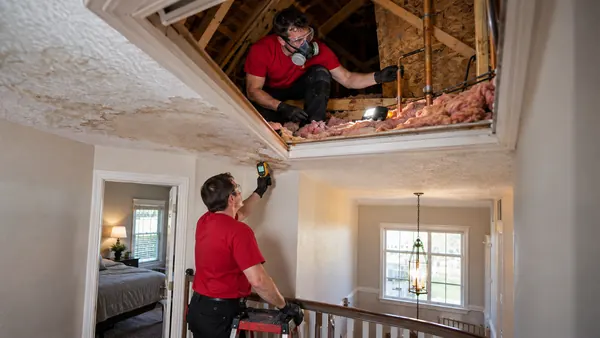
With no one inside, a split pipe can run until the water meter catches it or the neighbors do. On a tall two-story or a daylight basement house, water can fall through three levels. Cold also slows drying, so wet materials stay wet longer than in summer.
Vacant homes, rentals and holiday houses
The loss is not only the water. If the house is listed for sale, closing may be delayed. If it is a rental, a tenant move-in may be missed. If it belongs to an owner who lives elsewhere, there may be no one to authorize work or let us in.
We work with property managers, realtors and out-of-town owners. A lockbox code, a short call to the owner and photos sent to your phone are often enough to start. We document each room so you can see what happened from far away.
Leak sensors and smart shutoffs: what they can and cannot do
Leak sensors send an alert to your phone when they get wet. A smart shutoff valve closes the main when it senses flow that does not stop. Both are useful in a house that sits empty, because they shorten the time water runs.
They have limits. Sensors only detect water at their location, batteries die and a phone alert is no help if no one acts on it. They are most useful with a person who can check the house or let a crew in.
How a vacant-house freeze is usually found
Often it is found by someone else.
- A neighbor sees water at the door or in the driveway
- A realtor or property manager finds wet floors at a showing
- A water bill that spikes when the house has been empty
- Ice on the inside of a window or on a hose bib
- A ceiling that has sagged or dropped in one room
- A smell of damp as soon as the door is opened
How we work a vacant-property freeze
Secure the water
The main shutoff is found and closed. If the line is not yet repaired, a plumber is called in the same hour when possible.
Check safety
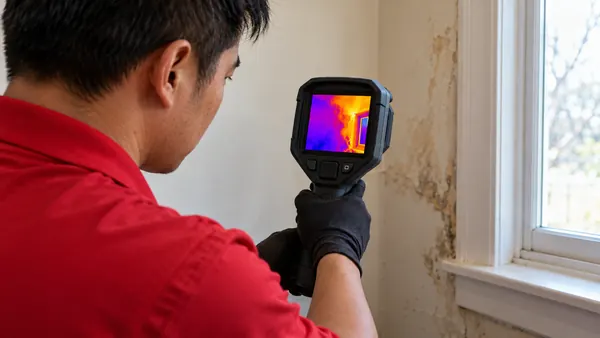
In a vacant house, we check for live circuits in wet areas, structural sag and any animal or mold concerns.
Extract
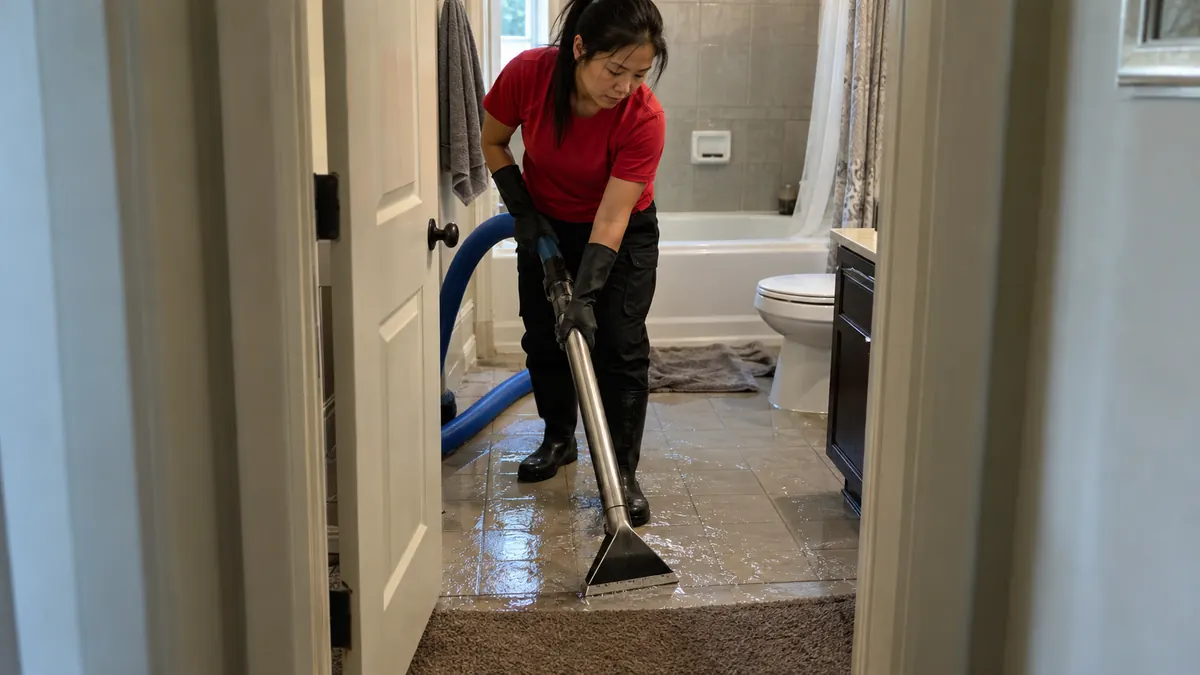
Water on floors, in basements and in crawl spaces is pumped out. Wet carpet and pad are cut and removed.
Open and dry the walls
Wet drywall and insulation are cut out, and wall cavities are opened where the pipe ran.
Run equipment
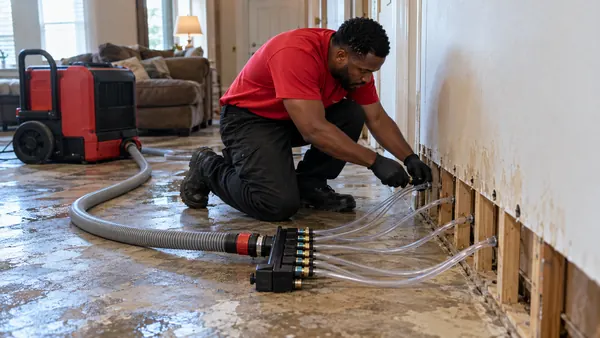
Heaters, dehumidifiers and air movers run. In cold weather we use heat to speed evaporation.
Report to the owner
Photos, moisture logs and a written scope are sent to the owner, the manager or the adjuster.
What we find in vacant freezes
- Several lines split at once, in different rooms
- Water that ran for days and soaked every floor
- Mold already growing by the time of discovery
- A thermostat that was off or a furnace that failed
Listing and closing: a freeze loss in a house for sale
A burst pipe in a listed house raises a hard question for sellers and buyers. What was damaged, was it dried properly and can the house close on schedule? Moisture logs, photographs and a clear written scope answer most of it.
We work with the listing agent, the owner and the buyer's representative when asked. Everyone sees the same records. Rebuilding is then scheduled around the closing timeline where possible.
If you find a frozen or burst pipe
- Shut off the water at the main valve or the street meter
- Do not turn the heat up all at once, which can stress cracked lines
- Turn off power to wet rooms if you can reach the panel dry
- Take photos before moving anything
- Call the owner and the insurance company
- Call a plumber and a drying crew
Vacant property freeze damage cost
A typical estimate for freeze damage in a vacant home runs about $3,000 to $15,000 or more, depending on how long the water ran and how many floors it reached. Plumbing repairs and rebuilding are separate. These are typical estimates, not guaranteed prices. Call for an exact quote. See all price ranges.
Questions we hear about this
Do you work with property managers?
Yes. We coordinate access, send photos and daily readings, and bill the owner or carrier as directed.
Is a freeze loss covered?
Many policies cover burst pipes but may require the house to have been heated, or the water shut off, while vacant. Read your policy and call your agent.
Can you help before a freeze?
We can tell you what usually works for empty homes. Turn off the water at the main and drain the lines, or keep the heat on and have someone check it. A plumber can winterize.
What if the house has been wet for a week?
We look for mold, remove what cannot be saved and use more drying time. The earlier the call, the smaller the job.
Do you handle the whole building if it is a duplex or townhome?
Yes. We work with the owner and the association to keep units dry and separate.
Where we see this most
- North Atlanta, GALarge multi-level homes that sit empty during listings or owner travel.
- Mountain Park, GALakeside and hillside homes used seasonally.
- Suwanee, GAMaster-on-main subdivisions where an empty house can run a leak unnoticed.